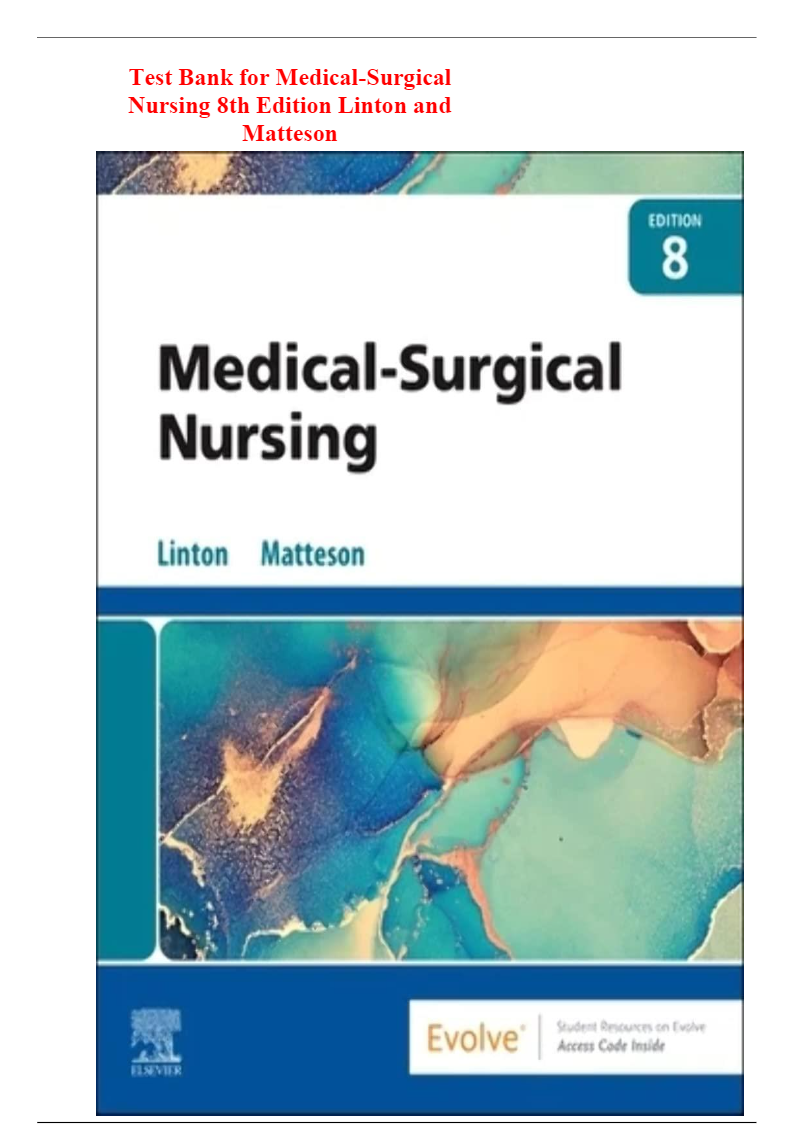
Medical-surgical nursing carries a reputation. Ask any nursing student, and they’ll tell you this is where the real work begins.
Every body system. Every disease process. Every medication. All applied to real adult patients with complicated, overlapping conditions.
This test bank exists because reading the textbook isn’t enough. You need repetition. You need to see how concepts translate into exam questions and clinical scenarios.
At Test Banks Hub, we built this resource directly from Linton and Matteson’s 8th edition. Every question matches the textbook’s structure, so your practice lines up exactly with what you’re studying in class.
Why Med-Surg Feels Like Drinking From a Fire Hose
Nobody warns you how much information this course actually contains.
- Cardiovascular disorders one week, respiratory the next
- Dozens of medications with similar-sounding names
- Lab values that change meaning depending on the diagnosis
- Priority questions that require weighing multiple correct-sounding answers
Most students describe med-surg as the course where they finally understand what nursing school is actually preparing them for.
That preparation requires active practice, not passive reading. This test bank gives you exactly that.
What’s Covered In This Test Bank
Every major content area from the textbook receives full question coverage.
Foundational Concepts
- Nursing process application
- Perioperative care
- Fluid and electrolyte balance
- Pain management principles
- Patient safety and infection control
Cardiovascular Disorders
- Coronary artery disease and MI
- Heart failure management
- Dysrhythmias
- Hypertension
- Peripheral vascular disease
Respiratory Conditions
- COPD and asthma
- Pneumonia
- Pulmonary embolism
- Respiratory failure
- Chest trauma
Gastrointestinal Disorders
- Peptic ulcer disease
- Inflammatory bowel disease
- Liver and pancreatic conditions
- Bowel obstruction
Endocrine Disorders
- Diabetes management
- Thyroid dysfunction
- Adrenal disorders
Renal and Urinary Conditions
- Acute kidney injury
- Chronic kidney disease
- Dialysis care basics
Neurological Disorders
- Stroke management
- Traumatic brain injury
- Seizure disorders
Musculoskeletal and Integumentary Conditions
- Fractures and joint disorders
- Burns and wound care
Hematologic and Oncologic Conditions
- Anemia types
- Cancer treatment and nursing care
Every question includes a complete rationale. You’ll understand the “why” behind every correct answer, not just memorize a response.
Question Types You’ll Practice
- Multiple choice questions
- Select-all-that-apply items
- Priority and sequencing questions
- Calculation-based problems
- Case study scenarios requiring integrated thinking
Real med-surg exams mix these formats. So does this test bank.
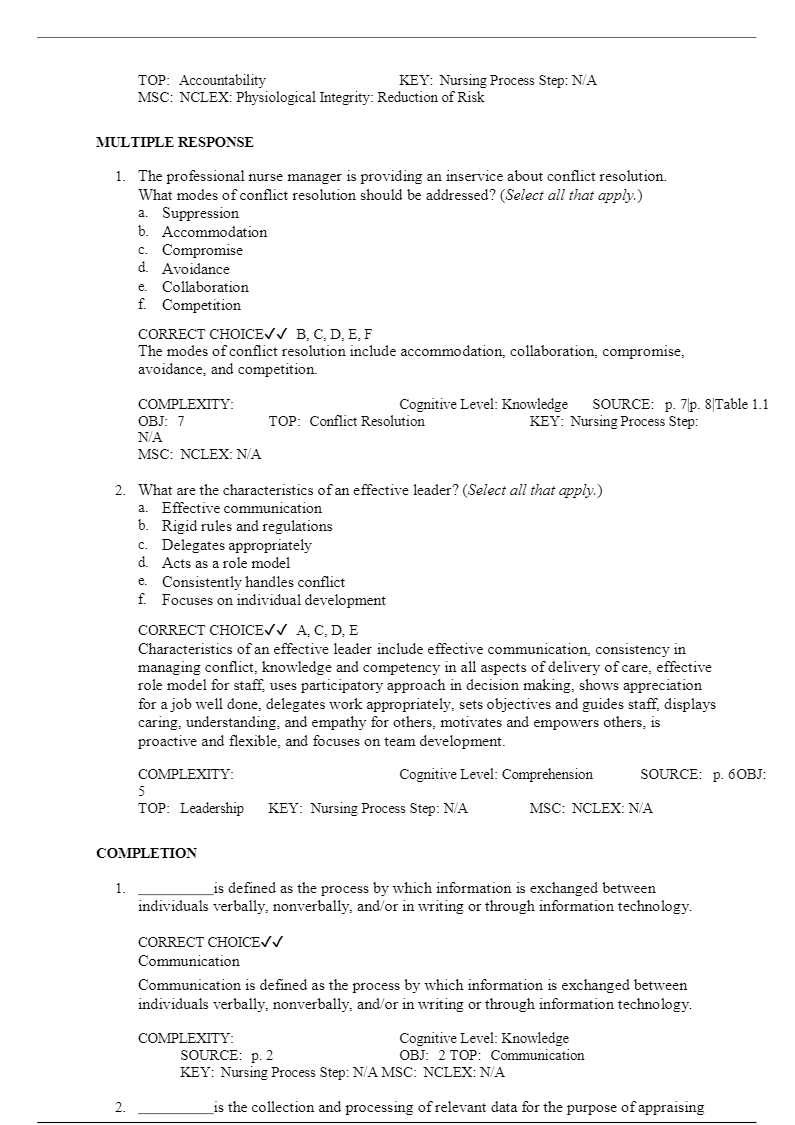
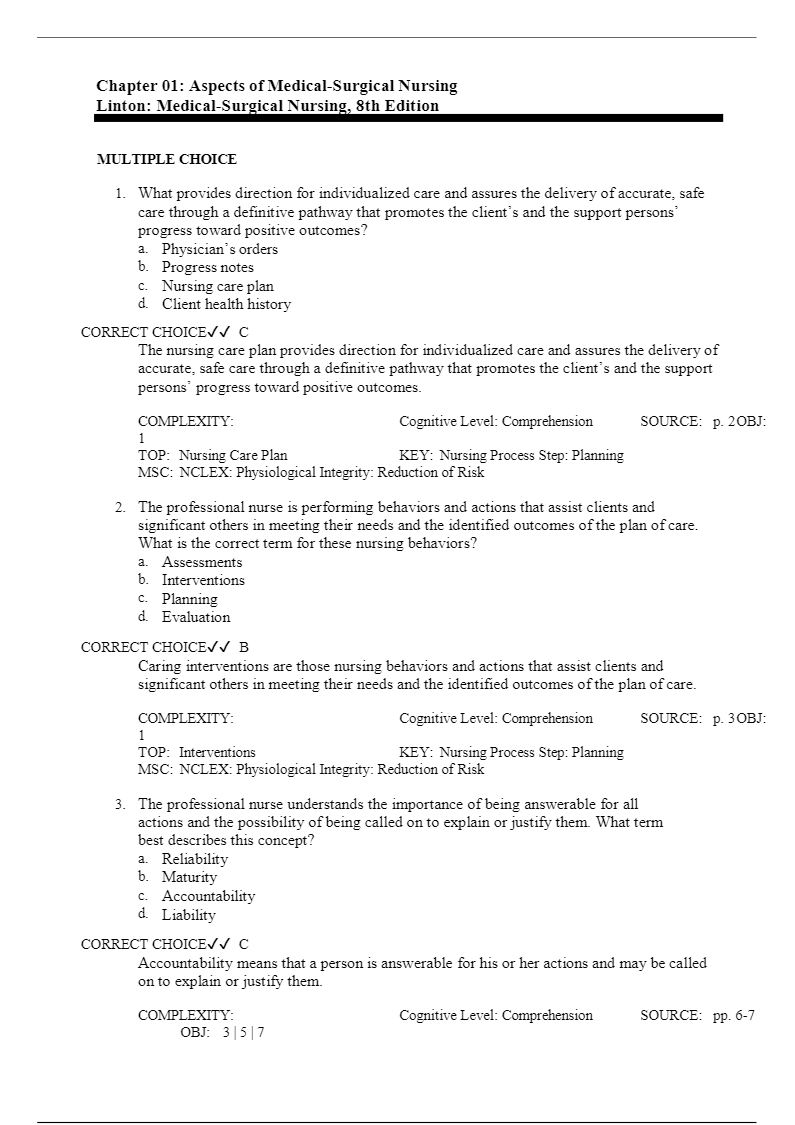
Five Sample Questions From This Test Bank
Here’s a preview of what’s included.
Question 1
A patient with heart failure is prescribed furosemide. Which assessment finding requires immediate nursing intervention?
A) Potassium level of 4.0 mEq/L
B) Potassium level of 2.9 mEq/L
C) Blood pressure of 118/76 mmHg
D) Weight loss of 1 pound since yesterday
Correct Answer: B
Rationale: Furosemide is a loop diuretic that causes potassium loss. A level of 2.9 mEq/L indicates significant hypokalemia, which can lead to dangerous cardiac dysrhythmias. This requires immediate intervention, while the other findings reflect expected or normal results.
Question 2
A patient with COPD has an oxygen saturation of 88%. The nurse should:
A) Immediately increase oxygen to 100% via non-rebreather mask
B) Administer oxygen cautiously and monitor respiratory status
C) Withhold oxygen therapy entirely
D) Notify the physician but take no immediate action
Correct Answer: B
Rationale: COPD patients rely on a hypoxic drive for breathing due to chronic CO2 retention. Administering oxygen cautiously while monitoring closely prevents suppressing this respiratory drive, which high-flow oxygen could cause.
Question 3
Which finding in a postoperative patient is most concerning for early hemorrhage?
A) Heart rate 88, blood pressure 122/78
B) Heart rate 128, blood pressure 88/56
C) Temperature 99.2°F
D) Urine output 40 mL/hour
Correct Answer: B
Rationale: Tachycardia combined with hypotension suggests hypovolemia, often from hemorrhage. Early compensatory mechanisms cause increased heart rate before blood pressure drops significantly, making this combination especially concerning.
Question 4
A patient with diabetic ketoacidosis has a blood glucose of 450 mg/dL and Kussmaul respirations. What is the priority nursing action?
A) Administer oral glucose tablets
B) Initiate IV fluid replacement as ordered
C) Withhold insulin until glucose decreases naturally
D) Encourage the patient to eat a high-carbohydrate meal
Correct Answer: B
Rationale: DKA requires immediate fluid resuscitation to address severe dehydration, followed by insulin administration to correct hyperglycemia and stop ketone production. Oral intake is inappropriate given the patient’s critical metabolic state.
Question 5
A patient recovering from a stroke has difficulty swallowing. What is the priority nursing intervention?
A) Provide thin liquids to prevent dehydration
B) Position the patient upright and assess swallowing before oral intake
C) Encourage rapid eating to complete meals quickly
D) Allow the patient to eat independently without supervision
Correct Answer: B
Rationale: Dysphagia after stroke increases aspiration risk. Positioning upright and conducting a swallow assessment before offering food or liquids protects airway safety. Thin liquids are often harder to control and increase aspiration risk compared to thickened liquids.
How To Study This Material Effectively
Med-surg content rewards active, structured practice over passive reading.
Study by body system, not randomly.
Match your practice sessions to your current unit of study. Cardiovascular this week, respiratory next week.
Read every rationale, even for questions you got right.
Confirming your reasoning matters as much as correcting mistakes.
Group similar medications together.
Comparing drug classes side by side clarifies differences in mechanism, side effects, and nursing considerations.
Practice priority questions specifically.
These require different thinking than straightforward recall questions. Dedicate focused time to this question type.
Revisit missed questions after 48 hours.
Spaced repetition strengthens retention better than repeated same-day review.
Who This Test Bank Is Built For
This resource supports:
- BSN and ADN nursing students
- LPN/LVN programs covering adult health content
- Students preparing for NCLEX
- Nursing instructors building exam questions
- Anyone using Linton and Matteson’s Medical-Surgical Nursing textbook
Whether you’re working through weekly assignments or doing comprehensive final exam review, this test bank fits your study routine.
Why Students Choose Test Banks Hub
We build test banks focused on actual learning, not just answer-checking.
- Detailed rationales explaining the clinical reasoning behind every answer
- NCLEX-style formatting matching current exam standards
- Direct alignment with the 8th edition textbook structure
- Instant digital access after purchase
- Affordable pricing built for student budgets
Med-surg nursing determines whether the rest of your program feels manageable or overwhelming. This test bank gives you the practice needed to build real confidence.
Frequently Asked Questions
Is this test bank based on the actual Linton and Matteson 8th edition textbook?
Yes. Every question corresponds directly to chapters, terminology, and disease content found in Medical-Surgical Nursing, 8th Edition.
Will this help me prepare for NCLEX, not just my course exams?
Yes. Question formats and cognitive levels mirror NCLEX testing standards, including priority-setting and select-all-that-apply formats.
Does this test bank cover pharmacology in depth?
Medication questions are integrated throughout each body system section, addressing mechanism of action, nursing implications, and patient teaching relevant to specific conditions.
How is this test bank delivered after purchase?
You receive instant digital access immediately after checkout.
Can I use this if my course covers content in a different order than the textbook?
Yes. Questions are organized by body system and topic, allowing you to study in whatever order matches your course syllabus.
Does this include calculation-based questions?
Yes. You’ll find dosage calculations, IV rate problems, and other math-based scenarios relevant to medical-surgical nursing practice.
Is this suitable for LPN/LVN programs, or only RN programs?
Both. Content addresses foundational adult health concepts applicable across nursing education levels, with some questions specifically addressing scope of practice differences.
How many questions are included in this test bank?
The test bank includes several hundred questions spanning all major body systems and medical-surgical content areas covered in the textbook.
Start Practicing Today
Medical-surgical nursing rewards preparation. The students who succeed aren’t necessarily the smartest in the room. They’re the ones who practiced enough application-based questions to think clearly under pressure.
This test bank gives you that practice. Real scenarios. Detailed rationales. Complete alignment with your textbook.
Get instant access today and start building the clinical knowledge your future patients are counting on.


Reviews
There are no reviews yet.