Maternity and pediatric nursing courses cover a lot of ground fast. One week you’re learning fetal heart rate patterns. The next you’re memorizing developmental milestones for a toddler. It’s easy to feel like the information is coming at you faster than you can absorb it.
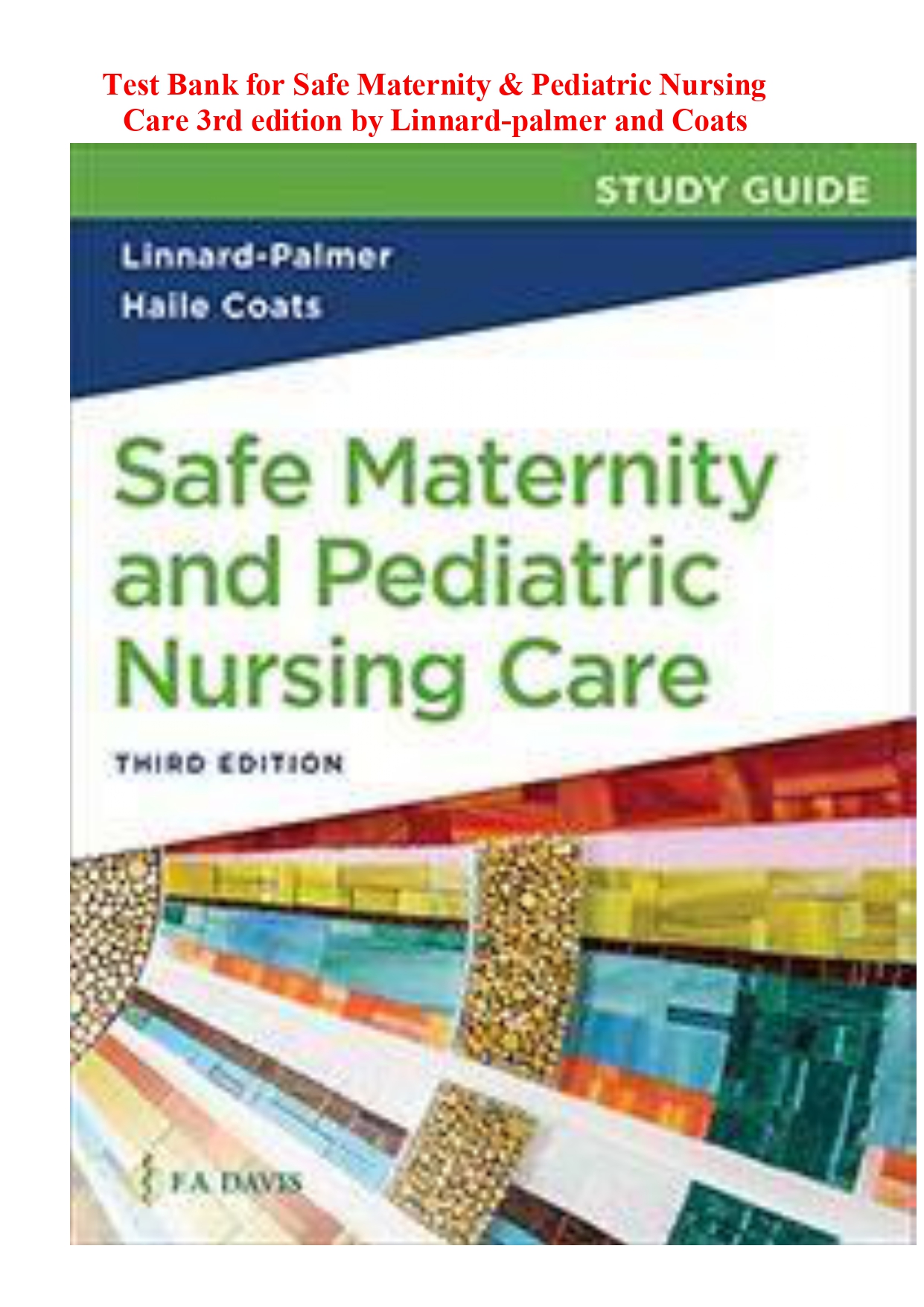
This test bank is built to help slow that down a bit. It follows the 3rd edition of Safe Maternity & Pediatric Nursing Care by Luanne Linnard-Palmer and Gloria Coats, chapter by chapter. So whatever section you’re working through in class, there’s a matching set of practice questions ready for you.
This resource isn’t a substitute for reading your textbook. It’s a way to test whether the information actually stuck. There’s a real difference between recognizing a concept while reading and being able to pull it up under exam pressure. Practicing with questions like these helps close that gap.
What Is a Test Bank?
A test bank is a large collection of practice questions tied to a specific textbook. Instructors often draw from resources like this when building their real exams. That means studying with this test bank trains you on the same style, format, and difficulty level you’re likely to face.
This resource covers the full scope of the 3rd edition, including safe maternal care throughout pregnancy, labor and birth, postpartum recovery, newborn care, and pediatric nursing across infancy, childhood, and adolescence. Since the textbook has a strong safety focus, this test bank also emphasizes clinical judgment and error prevention throughout.
Why Nursing Students Use Test Banks
Maternity and pediatric content asks you to recall a lot of specific numbers, ranges, and developmental stages. A test bank helps you retain that information through active practice instead of passive rereading. Here’s how.
You get used to safety-focused question wording. This textbook leans heavily into patient safety, so exam questions often ask what action prevents harm or catches an early warning sign. Practicing with similar questions trains you to spot those safety cues quickly.
You find your weak spots before the exam does. Maybe newborn assessment feels solid, but pediatric medication safety still feels shaky. Practice questions point you straight to what needs more review.
You build confidence heading into the exam. The more familiar the question format feels, the calmer you’ll be when the real test starts. A calm mind remembers more under pressure.
You save study time. Instead of flipping through the textbook trying to guess what’s testable, the material is already organized and ready to review.
What’s Inside This Test Bank
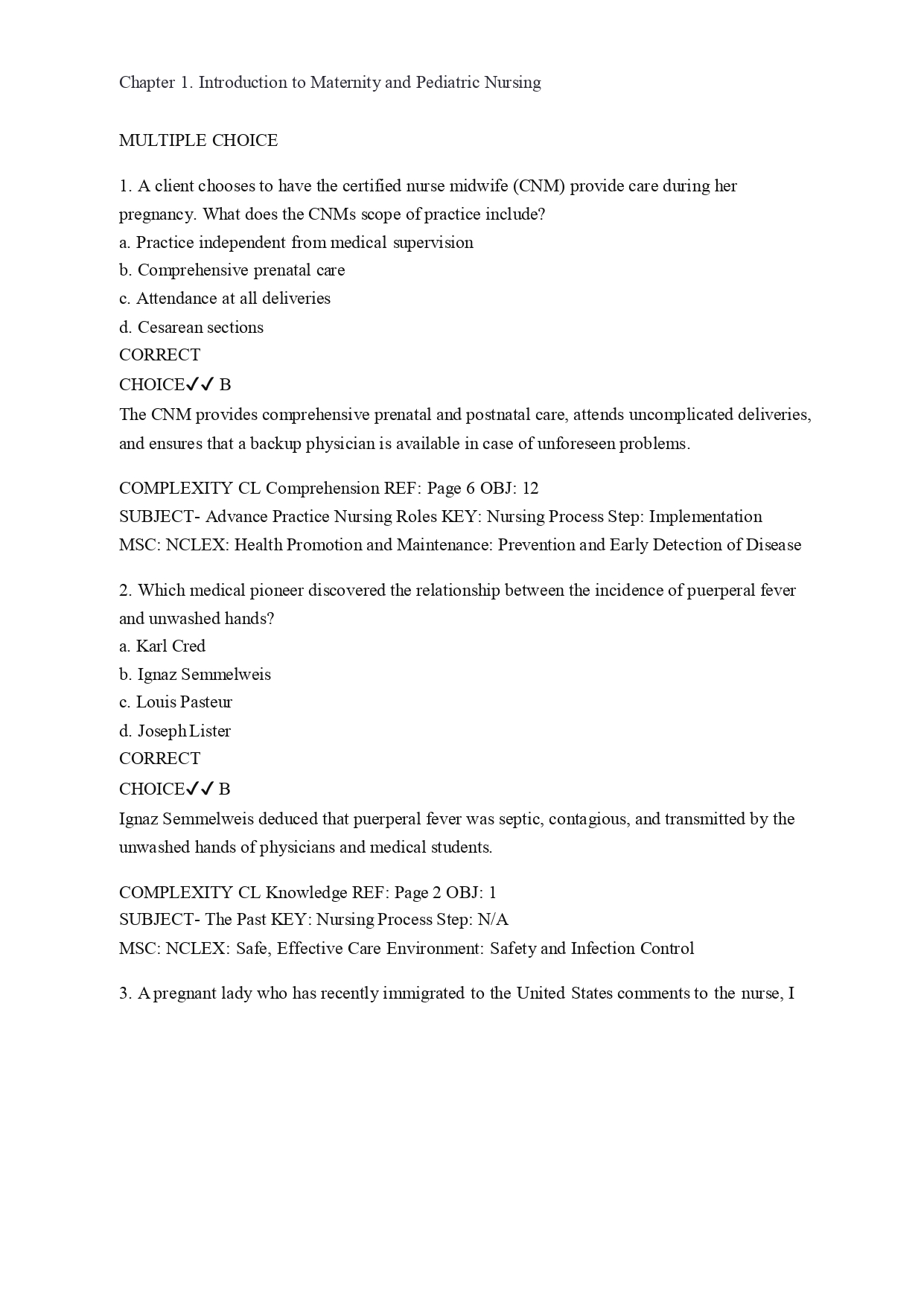
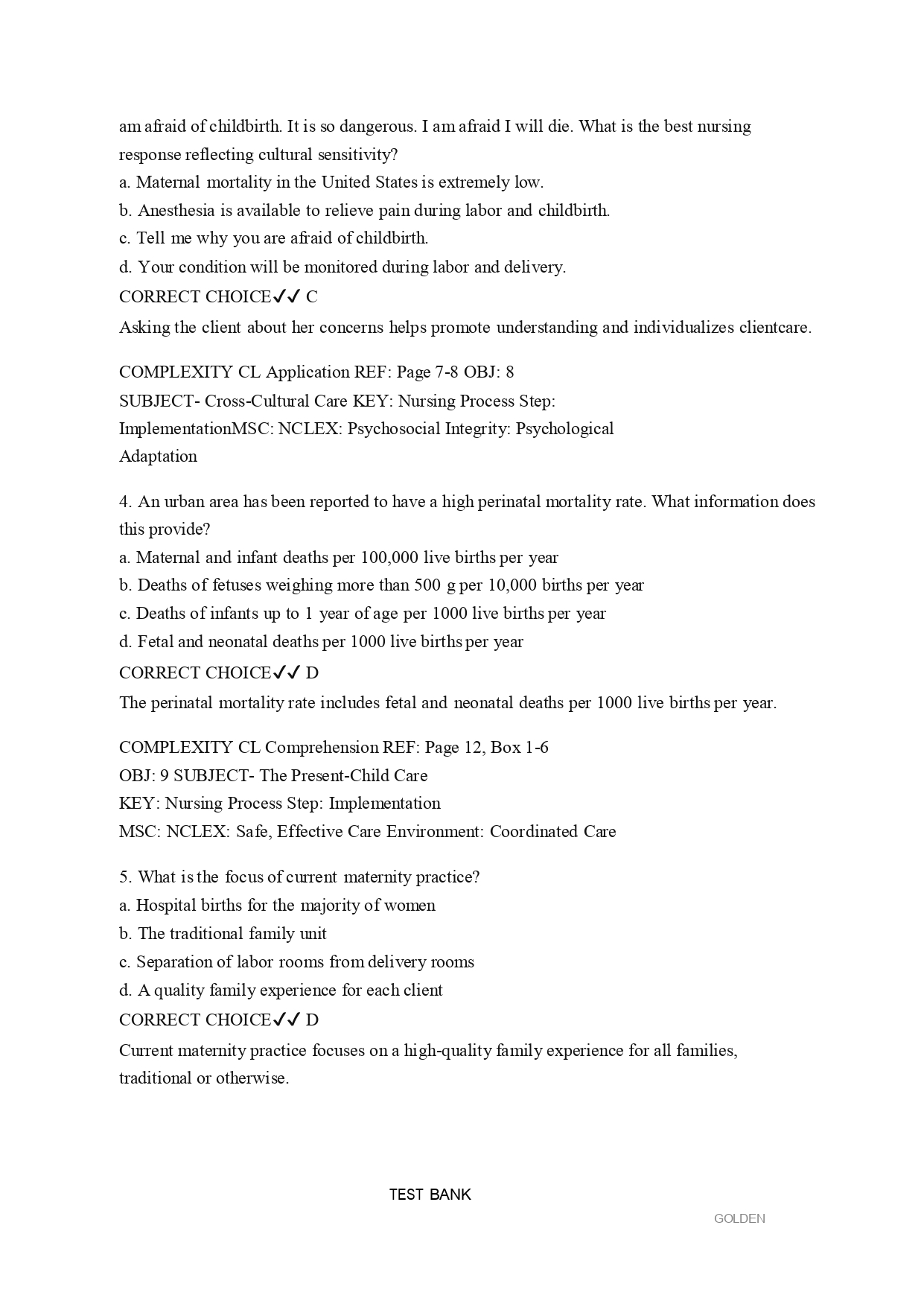
This resource includes multiple-choice questions organized by chapter, each paired with a correct answer and a rationale that explains why. The rationale is where the real learning happens. Memorizing an answer doesn’t help much if the real exam phrases the question differently. Understanding why an answer is correct is what actually transfers to unfamiliar questions.
Topics covered include:
- Antepartum, intrapartum, and postpartum nursing care
- High-risk pregnancy and complications
- Labor and delivery safety considerations
- Newborn assessment and early care
- Infant and childhood growth and development
- Pediatric medication safety and dosage calculations
- Pediatric illness and hospitalization care
- Family-centered and culturally sensitive care
- Patient safety and error prevention across maternity and pediatric settings
Sample Questions
Here are five sample questions similar to what’s inside the full test bank. Try answering them yourself before checking the rationale.
Question 1
A nurse is monitoring a laboring client’s fetal heart rate tracing and notes a pattern of gradual decreases and returns to baseline that mirror the timing of contractions. Which type of deceleration is this?
A. Early deceleration
B. Late deceleration
C. Variable deceleration
D. Prolonged deceleration
Correct Answer: A. Early deceleration
Rationale: Early decelerations mirror contractions in a gradual, symmetrical pattern and are caused by fetal head compression, which is a normal finding during labor. Late decelerations occur after the peak of a contraction and suggest uteroplacental insufficiency. Variable decelerations have an abrupt, irregular shape unrelated to contraction timing. Prolonged decelerations last longer than two minutes and require immediate attention.
Question 2
A nurse is calculating a pediatric medication dose based on the child’s weight in kilograms. Which action is most important before administering the medication?
A. Round the dose to the nearest whole number for simplicity
B. Verify the calculation with another qualified nurse
C. Administer the dose based on the child’s age instead of weight
D. Skip verification if the nurse is confident in the math
Correct Answer: B. Verify the calculation with another qualified nurse
Rationale: Independent double-checking of pediatric medication calculations is a critical safety step, since children are highly sensitive to dosing errors. Rounding without a clear clinical reason can cause inaccurate dosing. Weight-based dosing is standard for children and generally more accurate than age-based estimates. Skipping verification, regardless of confidence, increases the risk of a preventable medication error.
Question 3
A newborn born at 38 weeks gestation has a blood glucose level of 38 mg/dL at two hours of age. Which nursing action is the priority?
A. Document the finding and recheck in eight hours
B. Feed the newborn and recheck glucose per protocol
C. Withhold feeding until the physician arrives
D. Assume the reading is inaccurate and disregard it
Correct Answer: B. Feed the newborn and recheck glucose per protocol
Rationale: A glucose level of 38 mg/dL indicates hypoglycemia in a newborn, and early feeding is a first-line intervention to raise blood sugar, followed by rechecking per facility protocol. Waiting eight hours to recheck delays needed intervention. Withholding feeding could worsen hypoglycemia. Disregarding an abnormal result without follow-up ignores a genuine safety concern.
Question 4
A 6-year-old is scheduled for a minor outpatient procedure. Which approach best supports the child’s understanding and reduces fear, according to developmentally appropriate care?
A. Give a detailed medical explanation using clinical terminology
B. Avoid mentioning the procedure until right before it happens
C. Use simple, honest, age-appropriate language and allow the child to ask questions
D. Assume the child is too young to understand any explanation
Correct Answer: C. Use simple, honest, age-appropriate language and allow the child to ask questions
Rationale: School-age children benefit from honest, simple explanations that match their developmental level, along with the chance to ask questions, which reduces fear of the unknown. Clinical terminology can confuse and increase anxiety. Withholding information until the last moment often increases fear rather than easing it. Assuming a child can’t understand any explanation overlooks their actual developmental capacity at this age.
Question 5
A client is 4 hours postpartum following a vaginal delivery. The nurse notes a boggy uterus above the level of the umbilicus and heavier than expected lochia. Which action should the nurse take first?
A. Document the findings and reassess in one hour
B. Massage the fundus
C. Notify the physician immediately without further assessment
D. Encourage the client to ambulate right away
Correct Answer: B. Massage the fundus
Rationale: A boggy, higher-than-expected fundus with heavy lochia suggests uterine atony, and fundal massage is the immediate first-line nursing action to help the uterus contract and reduce bleeding risk. Simply documenting and waiting an hour delays needed intervention. Physician notification may be necessary if massage doesn’t resolve the issue, but the nurse should act first. Encouraging ambulation is not appropriate as an initial response to active bleeding risk.
Who This Test Bank Is For
This resource fits nursing students currently enrolled in a maternity and pediatric nursing course, especially one that emphasizes patient safety and clinical judgment. It also supports NCLEX preparation, since maternity and pediatric safety concepts appear frequently on licensure exams. Instructors may find it useful too, as a reference for building quizzes or exam questions.
How to Study With This Test Bank
Don’t just read through the questions once and move on. Quiz yourself for real. Cover the choices, commit to an answer, then check the rationale. If you miss one, pause on it. Ask yourself what safety concern or clinical detail you overlooked. That reflection is where the real learning sticks, especially with safety-focused content like this.
Working through one chapter at a time tends to work better than trying to cover everything in a single sitting. Spacing your review out across several days helps the material stay in your memory longer than a last-minute cram session.
Instant Digital Access
This test bank comes as a digital file, so there’s no shipping wait involved. Once your order is complete, you can download it and start studying right away. It’s meant to work alongside your textbook and class notes, not replace either one.
Frequently Asked Questions
Is this the same as the textbook itself?
No. This is a test bank, meaning a collection of practice questions. It’s meant to be used together with the textbook, not in place of it.
Does every question include a rationale?
Yes. Each question comes with the correct answer and a clear explanation of why that answer is right.
Will this help me prepare for the NCLEX?
It can. Maternity and pediatric safety concepts are heavily represented on the NCLEX, so this practice builds directly relevant skills.
Is this test bank specific to the 3rd edition?
Yes. The questions are organized to match the chapters and content found in the 3rd edition of Safe Maternity & Pediatric Nursing Care by Linnard-Palmer and Coats.
How do I receive the file after purchasing?
You’ll get instant digital access right after checkout, so you can start studying immediately.
Can instructors use this resource too?
Yes. Instructors often use test banks as a reference when building quizzes, exams, or review sessions.
Is using a test bank considered cheating?
No, as long as it’s used for studying and practice rather than during an actual exam. Reviewing practice questions to build understanding is a common and accepted study method among nursing students.


Kevin May –
Excellent
Betty N. –
Exactly what I have been looking for