Pediatric nursing asks you to think about a moving target. Kids aren’t just small adults. Their vital signs change by age, their coping skills change by developmental stage, and even a routine assessment finding can mean something completely different depending on whether you’re looking at an infant or a teenager. That constant shifting is exactly what makes this subject tricky to study for.
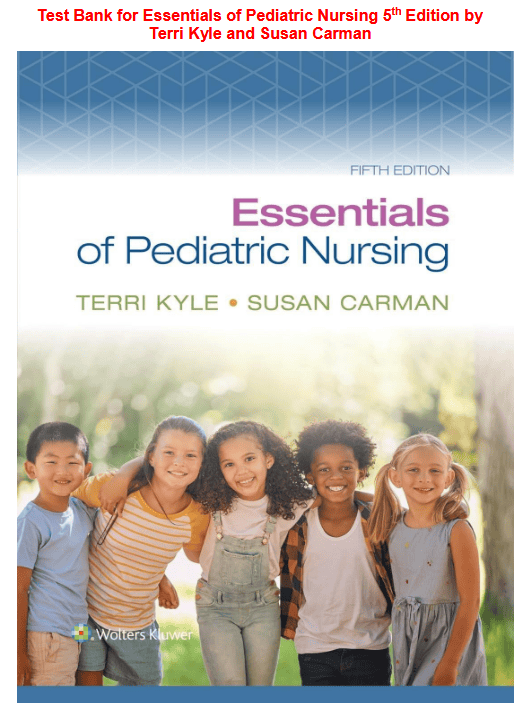
This test bank is built to help with that. It follows the 5th edition of Essentials of Pediatric Nursing by Theresa Kyle and Susan Carman, chapter by chapter. Whatever age group or condition you’re covering in class, there’s a matching set of practice questions ready for you.
This resource isn’t meant to replace your textbook’s growth charts and developmental milestone tables. It’s meant to test whether that information actually sticks. Reading about toddler-specific pain assessment is one thing. Applying it correctly on an exam question is a different skill, and that’s exactly what repeated practice builds.
What Is a Test Bank?
A test bank is a large collection of practice questions built around a specific textbook. Instructors often draw from resources like this when writing their actual exams. That means studying with this test bank familiarizes you with the tone, structure, and difficulty level your real exam is likely to use.
This resource spans the full range of the 5th edition, including growth and development across childhood, pediatric assessment techniques, common childhood illnesses, pediatric medication safety, and family-centered care in the hospital and community setting.
Why Nursing Students Use Test Banks for Pediatric Nursing
Pediatric exams often ask you to apply a concept to a specific age group, not just recall a general fact. A test bank helps train that kind of precise thinking. Here’s how.
You get sharper at age-specific reasoning. A normal heart rate for a newborn is very different from a normal heart rate for a school-age child. Practicing with similar questions trains your brain to automatically adjust expectations based on age.
You find your weak spots before the exam does. Maybe infant assessment feels solid, but adolescent development still feels shaky. Practice questions point you straight to what needs more review.
You build confidence heading into the exam. The more familiar the question format feels, the calmer you’ll be when the real test starts. That matters a lot in a subject where small age-related details change the correct answer.
You study more efficiently. Instead of flipping through growth charts trying to guess what’s testable, the material is already organized and ready for review.
What’s Inside This Test Bank
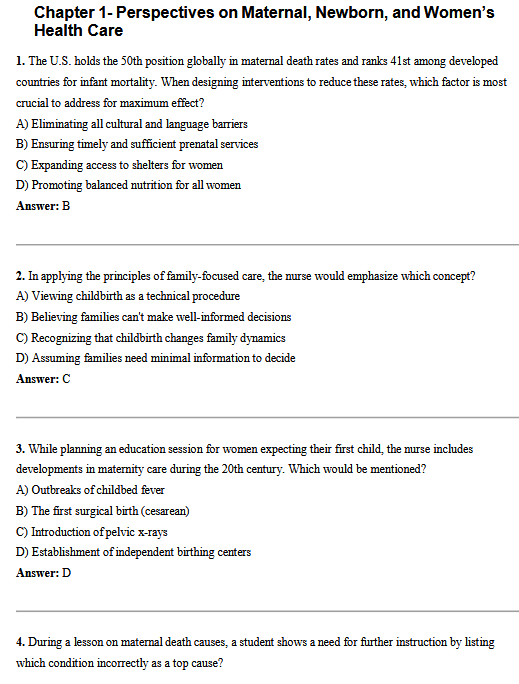
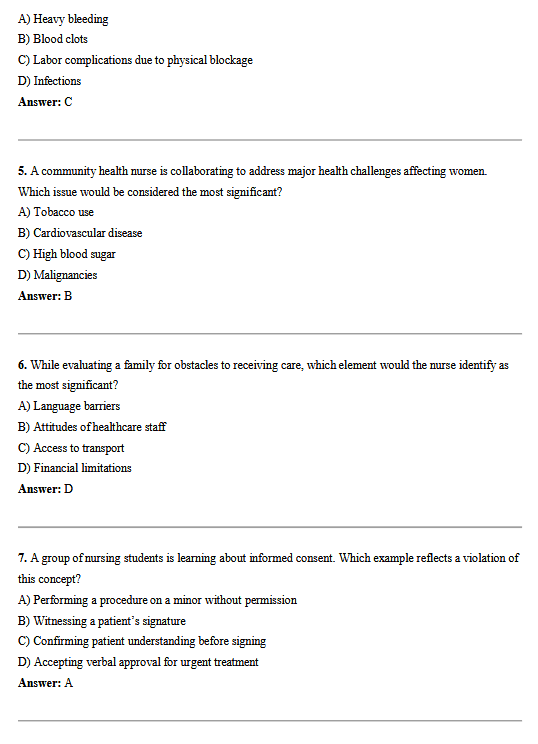
This resource includes multiple-choice questions organized by chapter, each with a correct answer and a rationale explaining why. The rationale matters just as much as the answer. Pediatric exams often hinge on subtle age-based details. Understanding why an answer fits a specific developmental stage is what actually prepares you for real pediatric assessment, not just for passing a test.
Topics covered include:
- Growth and development from infancy through adolescence
- Pediatric health assessment and history-taking
- Pediatric medication administration and dosage safety
- Common respiratory, gastrointestinal, and infectious childhood illnesses
- Congenital and genetic conditions
- Pain assessment and management in children
- Hospitalized child and family-centered care
- Pediatric emergencies and safety
- Chronic illness and long-term pediatric care
- Immunizations and preventive health care
Sample Questions
Here are five sample questions similar to what’s inside the full test bank. Try answering them before checking the rationale.
Question 1
A nurse is assessing a 6-month-old infant’s heart rate. Which finding would the nurse expect to be within normal limits?
A. 60 beats per minute
B. 90 beats per minute
C. 130 beats per minute
D. 200 beats per minute
Correct Answer: C. 130 beats per minute
Rationale: A normal heart rate for an infant typically ranges from about 100 to 160 beats per minute, so 130 falls within expected limits. A rate of 60 would be considered bradycardic for an infant. A rate of 90, while closer to normal for an older child or adult, is on the low side for this age group. A rate of 200 would indicate tachycardia and warrant further assessment.
Question 2
A nurse is using a pain assessment tool with a 3-year-old child who has limited verbal ability to describe pain. Which tool is most appropriate?
A. Numeric pain rating scale
B. FLACC scale
C. Visual analog scale
D. Self-report pain diary
Correct Answer: B. FLACC scale
Rationale: The FLACC scale uses observed behaviors, including face, legs, activity, cry, and consolability, making it appropriate for young children who cannot reliably self-report pain using numbers or words. Numeric and visual analog scales require verbal or cognitive skills that a 3-year-old typically hasn’t developed yet. A self-report diary also depends on verbal and literacy skills beyond this age group.
Question 3
A toddler is admitted to the hospital for a short stay. Which behavior would the nurse expect as a normal response to separation anxiety at this developmental stage?
A. Complete indifference to the parent leaving
B. Protest, despair, and eventual detachment if separation continues
C. Immediate acceptance of hospital staff as primary caregivers
D. No emotional response due to limited cognitive development
Correct Answer: B. Protest, despair, and eventual detachment if separation continues
Rationale: Toddlers commonly move through stages of protest, despair, and detachment when separated from a parent for an extended period, reflecting normal separation anxiety at this developmental stage. Indifference or immediate acceptance of new caregivers would be unusual and potentially concerning. Toddlers do experience emotional responses to separation, even though their ability to express it verbally is limited.
Question 4
A child with a history of asthma is brought to the emergency department with wheezing, use of accessory muscles, and a respiratory rate of 40 breaths per minute. Which action should the nurse take first?
A. Obtain a detailed history of past asthma triggers
B. Administer a prescribed bronchodilator
C. Encourage the child to lie flat and rest
D. Wait for the physician to arrive before intervening
Correct Answer: B. Administer a prescribed bronchodilator
Rationale: A child showing signs of respiratory distress, including accessory muscle use and an elevated respiratory rate, needs prompt bronchodilator administration to relieve airway constriction. Gathering a detailed history can wait until after the acute symptoms are addressed. Lying flat can worsen breathing difficulty in respiratory distress. Waiting for the physician delays urgent treatment the nurse can often initiate under protocol.
Question 5
A nurse is providing discharge teaching to the parents of a 2-year-old newly diagnosed with type 1 diabetes. Which statement by the parents indicates a need for further teaching?
A. “We will rotate injection sites to prevent skin changes.”
B. “We should check blood sugar levels as directed by the care team.”
C. “We can adjust the insulin dose ourselves if our child seems more active than usual.”
D. “We will watch for signs of low blood sugar, like shakiness or unusual sleepiness.”
Correct Answer: C. “We can adjust the insulin dose ourselves if our child seems more active than usual.”
Rationale: Parents should not independently adjust insulin doses based on activity level without guidance from the healthcare team, since this can lead to dangerous blood sugar swings, so this statement indicates a need for further teaching. Rotating injection sites, checking blood sugar as directed, and recognizing hypoglycemia symptoms are all accurate statements that reflect correct understanding of diabetes management.
Who This Test Bank Is For
This resource fits nursing students currently enrolled in a pediatric nursing course. It also supports NCLEX preparation, since pediatric nursing concepts appear consistently on licensure exams. Instructors may find it useful too, as a reference for building quizzes or exam material.
How to Study With This Test Bank
Don’t just read through the questions passively. Quiz yourself for real. Cover the answer choices, pick one, then check the rationale closely. Pediatric questions often hinge on age-specific details, so paying close attention to why an answer fits a particular developmental stage is exactly the skill your real exam will test.
Working through one age group or chapter at a time tends to work better than trying to review everything in one sitting. Spacing your review out over several days helps keep age-related norms and milestones from blurring together in your memory.
Instant Digital Access
This test bank is delivered as a digital file, so there’s no shipping wait. Once your order is complete, you can download it and start studying right away. It’s designed to work alongside your textbook and class notes, not replace either one.
Frequently Asked Questions
Is this the same as the textbook itself?
No. This is a test bank, meaning a collection of practice questions. It’s meant to be used together with the textbook, not instead of it.
Does every question include a rationale?
Yes. Each question comes with the correct answer along with a clear explanation of why that answer is right.
Will this help me prepare for the NCLEX?
It can. Pediatric nursing concepts appear consistently on the NCLEX, so this practice builds directly relevant skills.
Is this test bank matched to the 5th edition specifically?
Yes. The questions are organized to align with the chapters and content found in the 5th edition of Essentials of Pediatric Nursing by Kyle and Carman.
How do I receive the file after purchasing?
You’ll get instant digital access right after checkout, so you can start studying immediately.
Can instructors use this resource too?
Yes. Instructors often use test banks as a reference when building quizzes, exams, or review sessions.
Is using a test bank considered cheating?
No, as long as it’s used for studying and practice rather than during an actual exam. Reviewing practice questions to strengthen understanding is a common and accepted study method among nursing students.


Chloe D. –
Easy to study with
Winnie583 –
Helped me pass easily