In emergency care, you don’t have the luxury of time. A patient arrives unresponsive. Their airway is compromised. Their blood pressure is crashing. You need to know exactly what’s happening inside their body, right now, with almost no information to work with.
That’s what makes this course different from a standard A&P class. Every structure you learn connects directly to a field decision you’ll eventually make. Airway anatomy isn’t abstract when you’re the one securing it. Cardiac conduction isn’t theoretical when you’re reading a rhythm strip in the back of a moving ambulance.
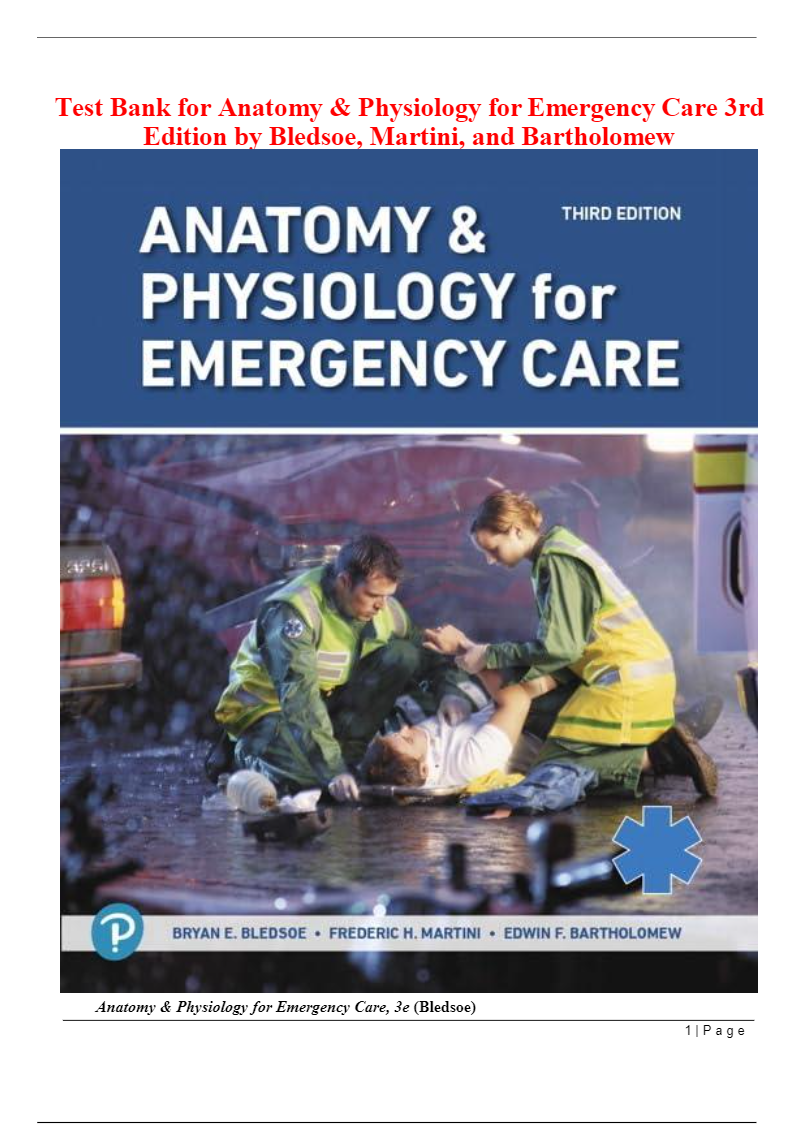
Bledsoe’s textbook was built specifically for EMS and emergency care providers, connecting anatomy and physiology directly to prehospital and emergency clinical practice. This test bank, based on the 3rd edition, gives you focused practice applying that knowledge under the pressure emergency scenarios actually demand.
At Test Banks Hub, we built this resource for students who need more than textbook facts. You need instant recall under pressure.
Why Emergency-Focused A&P Requires A Different Kind Of Studying
Standard A&P courses teach structure and function in a classroom context. This course adds urgency.
Here’s what makes it uniquely challenging:
- You need instant recall, not just eventual understanding
- Emergency scenarios rarely present textbook-perfect symptoms
- Airway, breathing, and circulation concepts must be second nature
- Trauma mechanisms require understanding anatomy from an injury perspective
- Field assessment relies on rapid pattern recognition, not slow deliberation
This test bank trains exactly that kind of thinking. Repetition builds speed. Speed builds the confidence emergency providers need in the field.
What This Test Bank Covers
Every major body system gets question coverage built specifically around emergency and trauma relevance.
Foundational Concepts for Emergency Providers
- Anatomical terminology and directional planes
- Homeostasis and its disruption during trauma or illness
- Cellular response to injury and shock
Airway and Respiratory System
- Upper and lower airway anatomy
- Mechanics of ventilation
- Gas exchange and oxygenation
- Respiratory failure and compensation mechanisms
Cardiovascular System
- Heart anatomy and the cardiac cycle
- Electrical conduction system
- Blood vessel structure and circulation
- Shock physiology and compensatory mechanisms
Nervous System
- Brain structures and their functions
- Spinal cord and peripheral nerve pathways
- Reflexes relevant to trauma assessment
- Increased intracranial pressure recognition
Musculoskeletal System
- Bone structure and fracture patterns
- Joint anatomy relevant to dislocations
- Muscle function in trauma and movement
Integumentary System
- Skin layers and wound assessment
- Burn classification relevance
- Thermoregulation in emergency settings
Endocrine and Metabolic Systems
- Hormone regulation relevant to diabetic emergencies
- Adrenal response during acute stress
- Metabolic compensation in critical illness
Abdominal and Genitourinary Systems
- Organ location relevant to trauma assessment
- Kidney function and fluid balance
- Reproductive anatomy relevant to obstetric emergencies
Every question includes a rationale connecting structure and function directly to emergency and trauma relevance. This isn’t anatomy for anatomy’s sake. It’s anatomy built for the field.
Question Formats You’ll Practice
- Multiple choice questions testing structure, function, and emergency application
- Scenario-based questions linking anatomy to field assessment
- Matching exercises reinforcing terminology
- Trauma mechanism questions connecting injury patterns to underlying anatomy
This mix mirrors both classroom exams and the practical, scenario-driven thinking EMS certification testing requires.
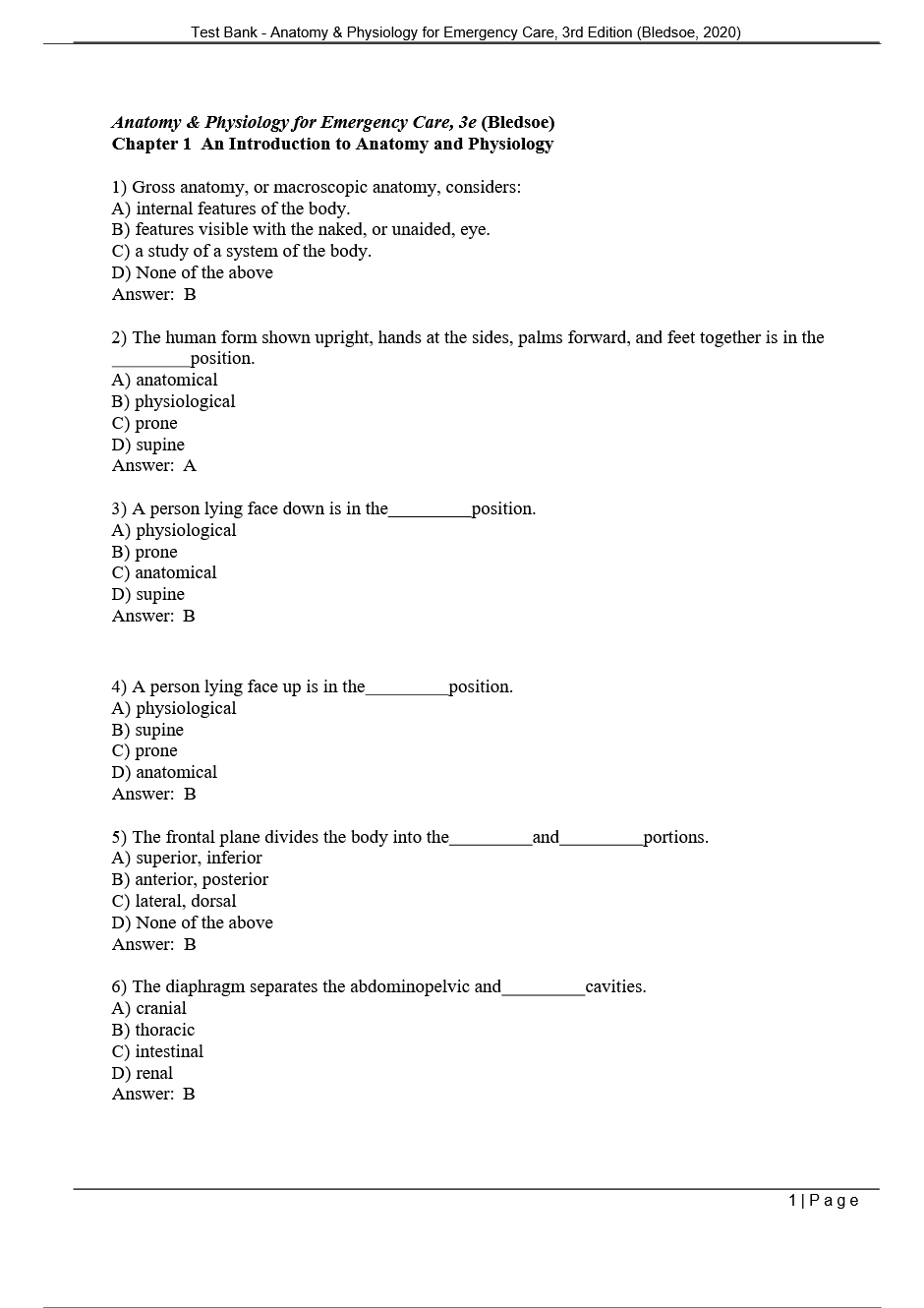
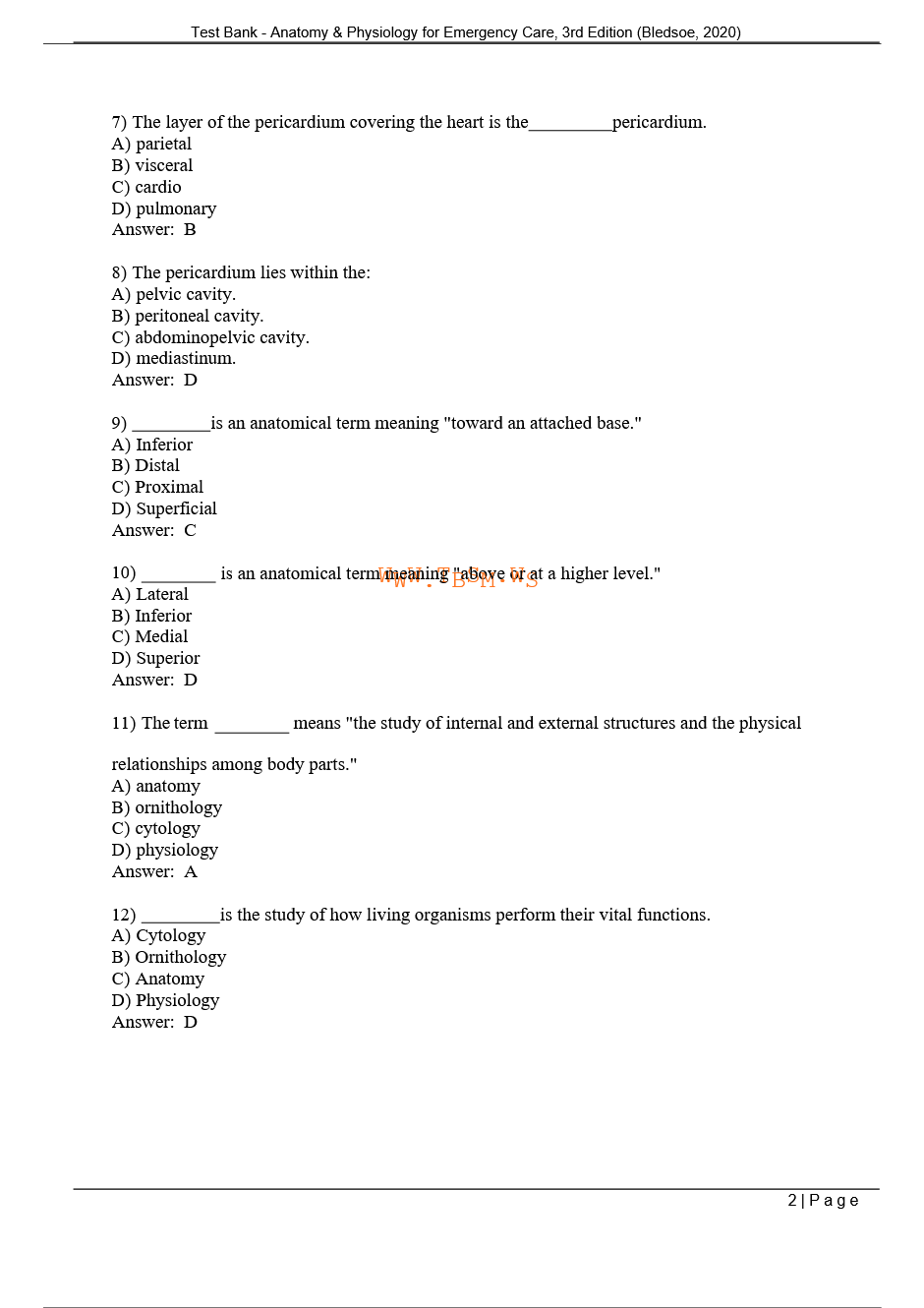
Five Sample Questions From This Test Bank
Here’s a preview of what’s included.
Question 1
A trauma patient has a suspected tension pneumothorax. Which physiological change explains the resulting hypotension?
A) Increased venous return to the heart
B) Compression of the vena cava and decreased cardiac output
C) Increased oxygen saturation
D) Decreased intrathoracic pressure
Correct Answer: B
Rationale: A tension pneumothorax causes air to accumulate in the pleural space, increasing intrathoracic pressure. This compresses the vena cava, reducing venous return to the heart and decreasing cardiac output, resulting in hypotension. Rapid recognition and decompression are critical.
Question 2
Which structure is primarily responsible for preventing food and liquid from entering the trachea during swallowing?
A) Thyroid cartilage
B) Epiglottis
C) Cricoid cartilage
D) Vocal cords
Correct Answer: B
Rationale: The epiglottis is a flap of cartilage that folds over the tracheal opening during swallowing, directing food and liquid into the esophagus instead of the airway. Understanding this structure is critical for airway management and recognizing aspiration risk.
Question 3
A patient in hypovolemic shock initially presents with tachycardia and normal blood pressure. This reflects which physiological stage?
A) Decompensated shock
B) Irreversible shock
C) Compensated shock
D) Cardiogenic shock
Correct Answer: C
Rationale: In compensated shock, the body activates mechanisms like increased heart rate and vasoconstriction to maintain blood pressure despite significant blood loss. Recognizing this early stage is critical, since blood pressure remains normal until compensation eventually fails.
Question 4
Which cranial nerve is responsible for pupillary constriction, and why does this matter in head injury assessment?
A) Cranial nerve II; changes indicate optic nerve damage only
B) Cranial nerve III; unequal pupils may indicate increased intracranial pressure
C) Cranial nerve VII; controls facial symmetry only
D) Cranial nerve X; regulates heart rate exclusively
Correct Answer: B
Rationale: Cranial nerve III (oculomotor) controls pupillary constriction. Unequal or non-reactive pupils following head trauma can indicate increased intracranial pressure or brain herniation, making pupil assessment a critical component of neurological trauma evaluation.
Question 5
A patient presents with a femur fracture and significant thigh swelling. Which structure’s damage poses the greatest immediate concern for blood loss?
A) Femoral vein only
B) Femoral artery
C) Sciatic nerve
D) Quadriceps muscle alone
Correct Answer: B
Rationale: The femoral artery runs close to the femur and can be damaged during fracture, causing significant, potentially life-threatening hemorrhage. Recognizing this anatomical relationship is essential for assessing blood loss risk in femur fractures.
How To Study This Material Effectively
Emergency-focused A&P rewards fast recall built through repeated, scenario-based practice.
Always connect structure to emergency relevance.
Don’t just memorize that the femoral artery runs through the thigh. Understand why that matters when a patient has a femur fracture.
Practice under simulated time pressure.
Field decisions happen fast. Timing your practice sessions builds the quick recall speed emergency situations demand.
Group anatomy by body region for trauma assessment.
Understanding everything located in the chest, for example, helps you anticipate injuries from mechanism of injury alone.
Review shock physiology repeatedly.
Compensated versus decompensated shock appears constantly in emergency assessment. Master this concept early and thoroughly.
Use mnemonics for cranial nerves and airway structures.
These details matter in trauma assessment and are worth the extra memorization effort.
Who This Test Bank Is Built For
This resource supports:
- EMT and paramedic students
- Emergency medical services degree programs
- Nursing students in emergency-focused coursework
- Flight and critical care transport trainees
- Anyone using Bledsoe’s Anatomy & Physiology for Emergency Care textbook
Whether you’re preparing for a semester exam or building field-ready knowledge for certification testing, this test bank fits your preparation needs.
Why Students Choose Test Banks Hub
We build test banks that connect knowledge directly to real-world application.
- Detailed rationales linking anatomy to emergency and trauma relevance
- Scenario-based questions mirroring actual field decision-making
- Direct alignment with the 3rd edition textbook structure
- Instant digital access after purchase
- Affordable pricing for EMS and nursing student budgets
Emergency providers don’t get second chances to look things up mid-call. This test bank builds the instant recall that keeps patients—and providers—safe.
Frequently Asked Questions
Is this test bank based on the actual Bledsoe 3rd edition textbook?
Yes. Every question aligns with chapters, terminology, and clinical connections found in Anatomy & Physiology for Emergency Care, 3rd Edition.
How is this different from a standard A&P test bank?
This test bank specifically emphasizes emergency and trauma relevance. Every rationale connects anatomical structures to field assessment, injury patterns, or emergency physiological responses, rather than general classroom application.
Will this help me prepare for NREMT or paramedic certification exams?
Yes. The scenario-based format and emergency-focused content align well with the clinical reasoning style used in EMS certification testing.
Does this cover trauma-specific anatomy in depth?
Yes. Trauma mechanisms, injury patterns, and their anatomical basis are emphasized throughout, particularly for the musculoskeletal, cardiovascular, and neurological systems.
How is this test bank delivered after purchase?
You receive instant digital access immediately after checkout.
Is this suitable for nursing students, or only EMS students?
Both. Nursing students in emergency department rotations or emergency-focused coursework find this content directly applicable alongside EMS and paramedic students.
Does this include shock physiology and compensatory mechanisms?
Yes. Shock stages, compensatory responses, and their underlying anatomy and physiology are covered extensively, given their critical importance in emergency assessment.
How many questions are included in this test bank?
The test bank includes several hundred questions spanning all major body systems and their emergency care applications covered in the textbook.
Start Building Field-Ready Knowledge Today
Emergency care doesn’t allow time to look things up. You need to know instantly what’s happening inside your patient’s body and what it means for your next action.
This test bank gives you that practice. Real scenarios. Detailed rationales connecting anatomy to emergency relevance. Complete alignment with your textbook.
Get instant access today and start building the fast, confident clinical thinking that emergency patients depend on.


Reviews
There are no reviews yet.