Psychiatric nursing asks something different of you than any other specialty.
There’s no lab value confirming depression. No imaging scan showing anxiety. No vital sign that tells you a patient is experiencing psychosis. You’re assessing thoughts, behaviors, and emotions using observation, communication, and clinical judgment alone.
That shift trips up a lot of students. You spent semesters learning to trust objective data. Now you’re learning to trust your assessment skills, your therapeutic communication, and your understanding of complex psychiatric conditions that don’t show up on any monitor.
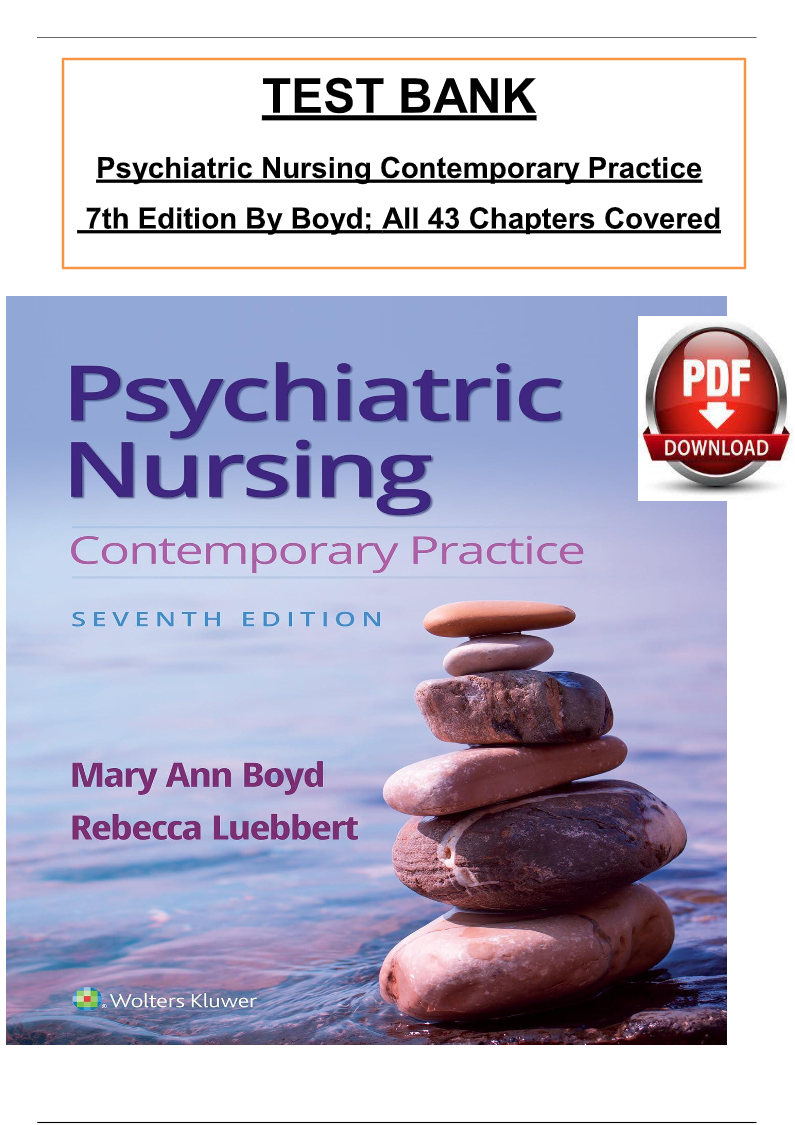
Boyd and Luebbert’s textbook has guided psychiatric nursing education for years because it grounds abstract mental health concepts in real clinical practice. This test bank, built from the 7th edition, gives you the structured practice needed to actually apply these concepts confidently.
At Test Banks Hub, we designed this resource to help you think through psychiatric scenarios the way you’ll actually encounter them.
Why Psychiatric Nursing Challenges Even Strong Students
Students who excel in med-surg sometimes struggle here. The skill set is genuinely different.
Here’s why:
- Assessment relies on communication and observation, not objective measurements
- Therapeutic communication techniques feel unnatural until practiced repeatedly
- Diagnostic categories overlap and share similar symptoms
- Medication side effects and interactions carry unique psychiatric considerations
- Legal and ethical issues around involuntary treatment add complexity
- Your own biases and comfort level get tested constantly
This test bank addresses these challenges through repeated, scenario-based practice. You’ll build the clinical judgment psychiatric assessment actually requires.
What This Test Bank Covers
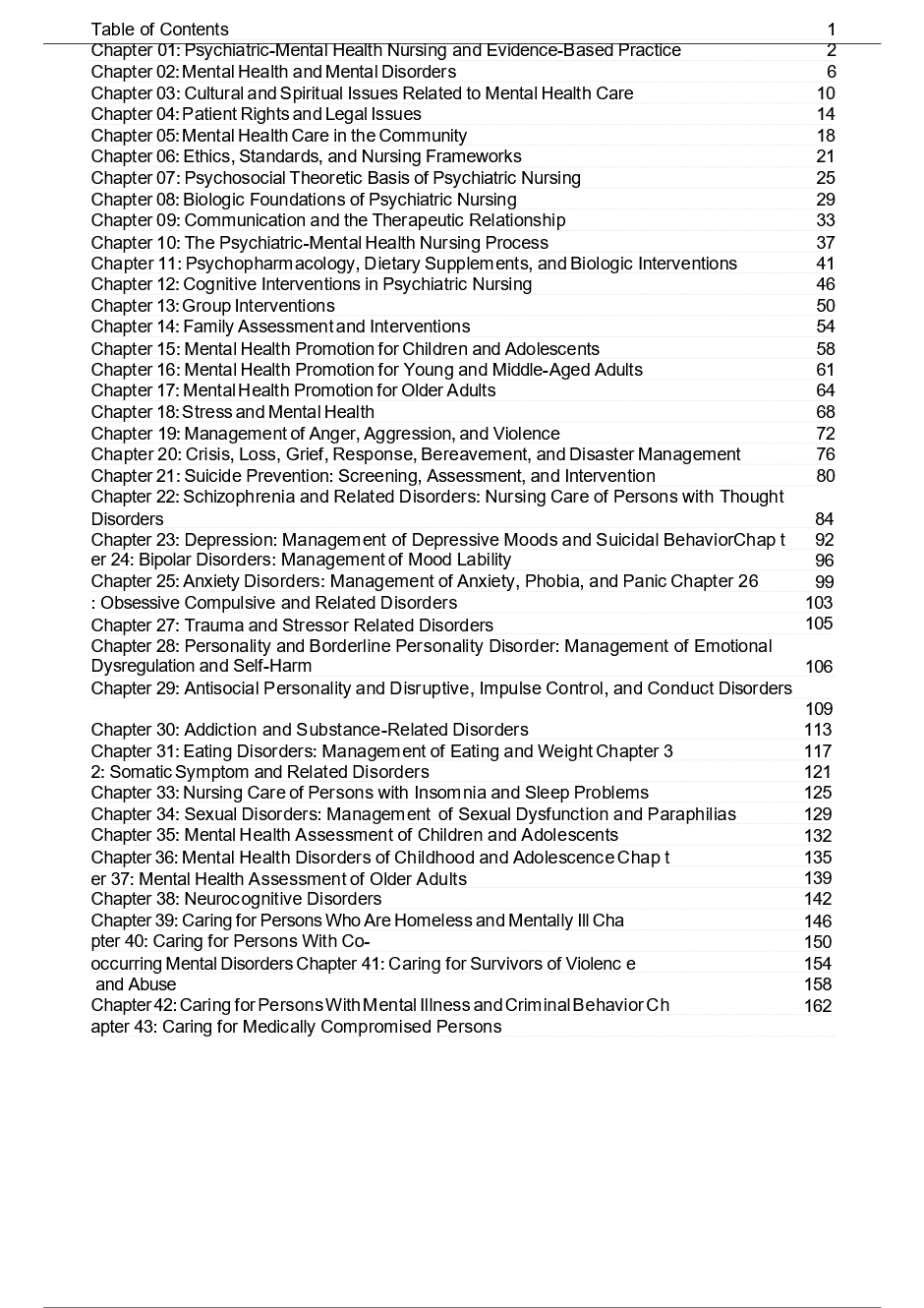
Every major content area from the textbook receives thorough question coverage.
Foundations of Psychiatric Nursing
- Mental health versus mental illness concepts
- Therapeutic communication techniques
- Nurse-patient relationship development
- Legal and ethical issues in psychiatric care
Psychiatric Assessment
- Mental status examination
- Risk assessment for suicide and violence
- Cultural considerations in mental health assessment
- Documentation specific to psychiatric care
Major Psychiatric Disorders
- Mood disorders (depression, bipolar disorder)
- Anxiety disorders and OCD
- Schizophrenia and psychotic disorders
- Personality disorders
- Eating disorders
- Substance use disorders
- Trauma and stressor-related disorders
Special Populations
- Child and adolescent psychiatric care
- Older adult mental health issues
- Perinatal mental health
Psychiatric Treatment Modalities
- Psychopharmacology across drug classes
- Individual and group therapy approaches
- Crisis intervention techniques
- Electroconvulsive therapy and other somatic treatments
Safety and Emergency Situations
- De-escalation techniques
- Suicide risk assessment and intervention
- Managing aggressive or violent behavior
- Involuntary commitment procedures
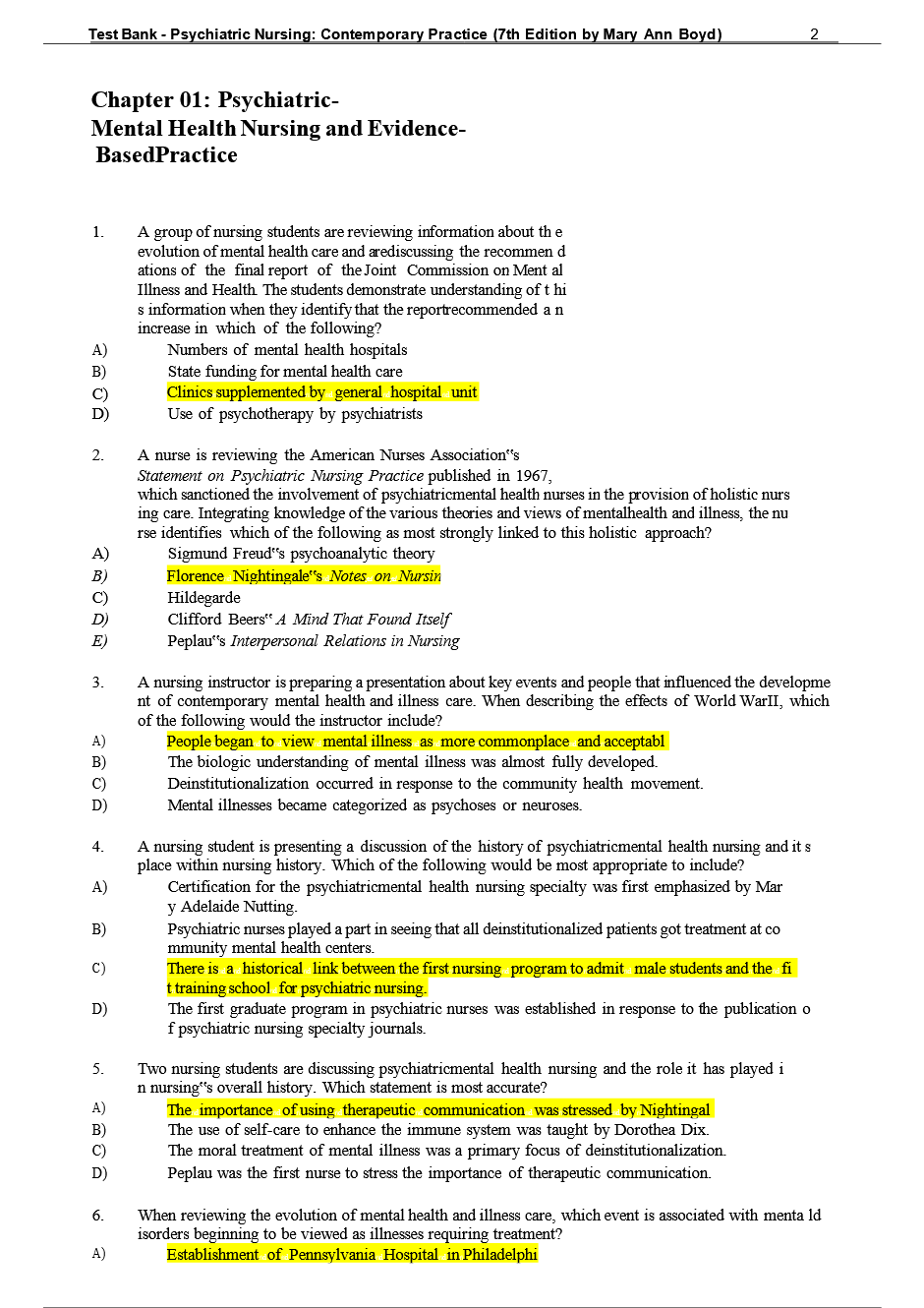
Every question includes a full rationale connecting symptoms, assessment findings, and interventions to underlying psychiatric principles. You’ll understand the reasoning behind therapeutic approaches, not just memorize disorder checklists.
Question Formats You’ll Practice
- Multiple choice questions testing assessment and intervention knowledge
- Select-all-that-apply items covering symptom clusters
- Scenario-based questions requiring therapeutic communication choices
- Priority questions addressing safety and risk assessment
This variety mirrors how psychiatric nursing exams and NCLEX questions are actually structured.
Five Sample Questions From This Test Bank
Here’s a preview of what’s included.
Question 1
A patient states, “I don’t see the point in living anymore.” What is the nurse’s most appropriate initial response?
A) “Everyone feels that way sometimes, it will pass.”
B) “Are you having thoughts of ending your life?”
C) “Let’s talk about something more positive.”
D) “I’ll let your doctor know you said that.”
Correct Answer: B
Rationale: Directly and calmly asking about suicidal ideation is essential when a patient makes statements suggesting hopelessness. Avoiding the topic or minimizing the statement can miss a critical opportunity for risk assessment and intervention. Direct questioning does not increase suicide risk, contrary to common misconceptions.
Question 2
A patient with schizophrenia reports hearing voices telling them to harm themselves. What is the nurse’s priority action?
A) Tell the patient the voices aren’t real
B) Assess the content and command nature of the hallucinations
C) Ignore the statement since hallucinations are expected with this diagnosis
D) Immediately administer PRN sedation without further assessment
Correct Answer: B
Rationale: Command hallucinations instructing self-harm require immediate, thorough assessment to determine risk level. Understanding the content helps guide safety planning. Dismissing the hallucination or jumping to medication without assessment ignores critical safety information.
Question 3
Which medication class carries the highest risk for extrapyramidal symptoms?
A) Selective serotonin reuptake inhibitors (SSRIs)
B) First-generation (typical) antipsychotics
C) Benzodiazepines
D) Mood stabilizers
Correct Answer: B
Rationale: First-generation antipsychotics block dopamine receptors strongly, leading to a higher risk of extrapyramidal symptoms such as tardive dyskinesia, akathisia, and dystonia. Second-generation antipsychotics carry lower, though not absent, risk of these effects.
Question 4
A patient diagnosed with borderline personality disorder frequently alternates between idealizing and devaluing the nursing staff. This behavior pattern is best described as:
A) Splitting
B) Transference
C) Countertransference
D) Dissociation
Correct Answer: A
Rationale: Splitting refers to the inability to integrate both positive and negative qualities of self and others, resulting in alternating extremes of idealization and devaluation. This is a hallmark defense mechanism seen in borderline personality disorder.
Question 5
A patient in a manic episode is pacing rapidly, speaking loudly, and interrupting other patients. What is the most appropriate nursing intervention?
A) Encourage the patient to participate in a competitive group activity
B) Provide a low-stimulation environment and set clear, consistent limits
C) Allow the patient unrestricted access to common areas to expend energy
D) Ignore the behavior since it will likely resolve independently
Correct Answer: B
Rationale: Patients experiencing mania benefit from reduced environmental stimulation and clear, consistent limit-setting to prevent escalation. Competitive activities or unrestricted stimulation can worsen agitation and impulsivity during manic episodes.
How To Study This Material Effectively
Psychiatric nursing content rewards scenario-based practice over straightforward memorization.
Practice therapeutic communication responses specifically.
These questions require choosing the most appropriate response among several reasonable-sounding options. Repeated practice builds this specific judgment skill.
Compare similar disorders side by side.
Bipolar disorder versus borderline personality disorder. Schizophrenia versus schizoaffective disorder. Understanding subtle distinctions prevents confusion on exams.
Prioritize safety-related content.
Suicide risk assessment, command hallucinations, and de-escalation techniques appear constantly. Master these concepts thoroughly before moving to less critical content.
Understand medication side effects deeply.
Psychiatric medications carry unique risks. Extrapyramidal symptoms, serotonin syndrome, and lithium toxicity require specific recognition skills.
Reflect on your own reactions to scenarios.
Psychiatric nursing sometimes challenges personal comfort levels. Noticing your own reactions builds self-awareness that improves therapeutic effectiveness.
Who This Test Bank Is Built For
This resource supports:
- BSN and ADN nursing students
- Students specifically using Boyd and Luebbert’s textbook
- Nurses preparing for psychiatric-mental health certification
- Students preparing for NCLEX psychiatric content
- Nursing instructors building exam questions on mental health nursing
Whether you’re working through a dedicated psychiatric nursing course or reviewing before comprehensive exams, this test bank supports your study needs.
Why Students Choose Test Banks Hub
We build test banks that reflect real psychiatric clinical practice.
- Detailed rationales explaining therapeutic reasoning behind every answer
- NCLEX-style formatting matching current exam standards
- Direct alignment with the 7th edition textbook structure
- Instant digital access after purchase
- Affordable pricing built for student budgets
Psychiatric patients deserve nurses who can assess, communicate, and intervene with genuine clinical confidence. This test bank builds that foundation.
Frequently Asked Questions
Is this test bank based on the actual Boyd and Luebbert 7th edition textbook?
Yes. Every question aligns with chapters, disorders, and therapeutic concepts found in Psychiatric Nursing: Contemporary Practice, 7th Edition.
Will this help me prepare for NCLEX psychiatric questions specifically?
Yes. Psychiatric content appears throughout NCLEX, and this test bank’s format and cognitive level closely mirror that testing style, including therapeutic communication and priority-setting questions.
Does this test bank cover psychopharmacology in depth?
Yes. Medication classes, mechanisms, side effects, and nursing considerations specific to psychiatric medications are covered extensively throughout relevant disorder sections.
How is this test bank delivered after purchase?
You receive instant digital access immediately after checkout.
I struggle with therapeutic communication questions specifically. Will this help?
Yes. A significant portion of this test bank focuses on communication scenarios, helping you practice selecting the most therapeutic response among multiple plausible options.
Does this cover suicide risk assessment and safety planning?
Yes. Given how critical this content is to psychiatric nursing practice, suicide risk assessment and safety intervention questions appear throughout multiple disorder categories.
Is this suitable for psychiatric-mental health nurse practitioner students?
While designed primarily for undergraduate nursing students, PMHNP students often find this test bank useful for foundational review before more advanced coursework.
How many questions are included in this test bank?
The test bank includes several hundred questions spanning all major psychiatric disorders and nursing concepts covered in the textbook.
Start Building Psychiatric Clinical Judgment Today
Psychiatric nursing requires a different kind of clinical thinking. Assessment through observation and conversation. Intervention through communication and therapeutic presence. Confidence built through genuine understanding, not memorized checklists.
This test bank gives you that practice. Real scenarios. Detailed rationales grounded in psychiatric clinical reasoning. Complete alignment with your textbook.
Get instant access today and start building the clinical judgment your future psychiatric patients deserve.


Reviews
There are no reviews yet.