
Nursing research courses can feel disconnected from actual practice. You read about randomized controlled trials. Study statistical significance. Learn methodology terminology. Then wonder how any of it connects to the patient care you actually want to provide.
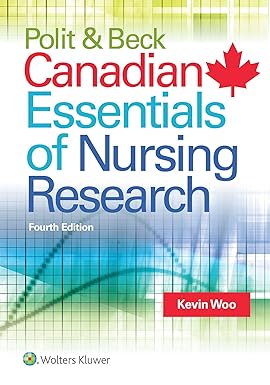
This Canadian adaptation of Polit and Beck’s foundational research textbook, developed by Woo, bridges that gap specifically for Canadian nursing education. It incorporates Canadian healthcare contexts, research examples, and regulatory considerations that international editions simply don’t address.
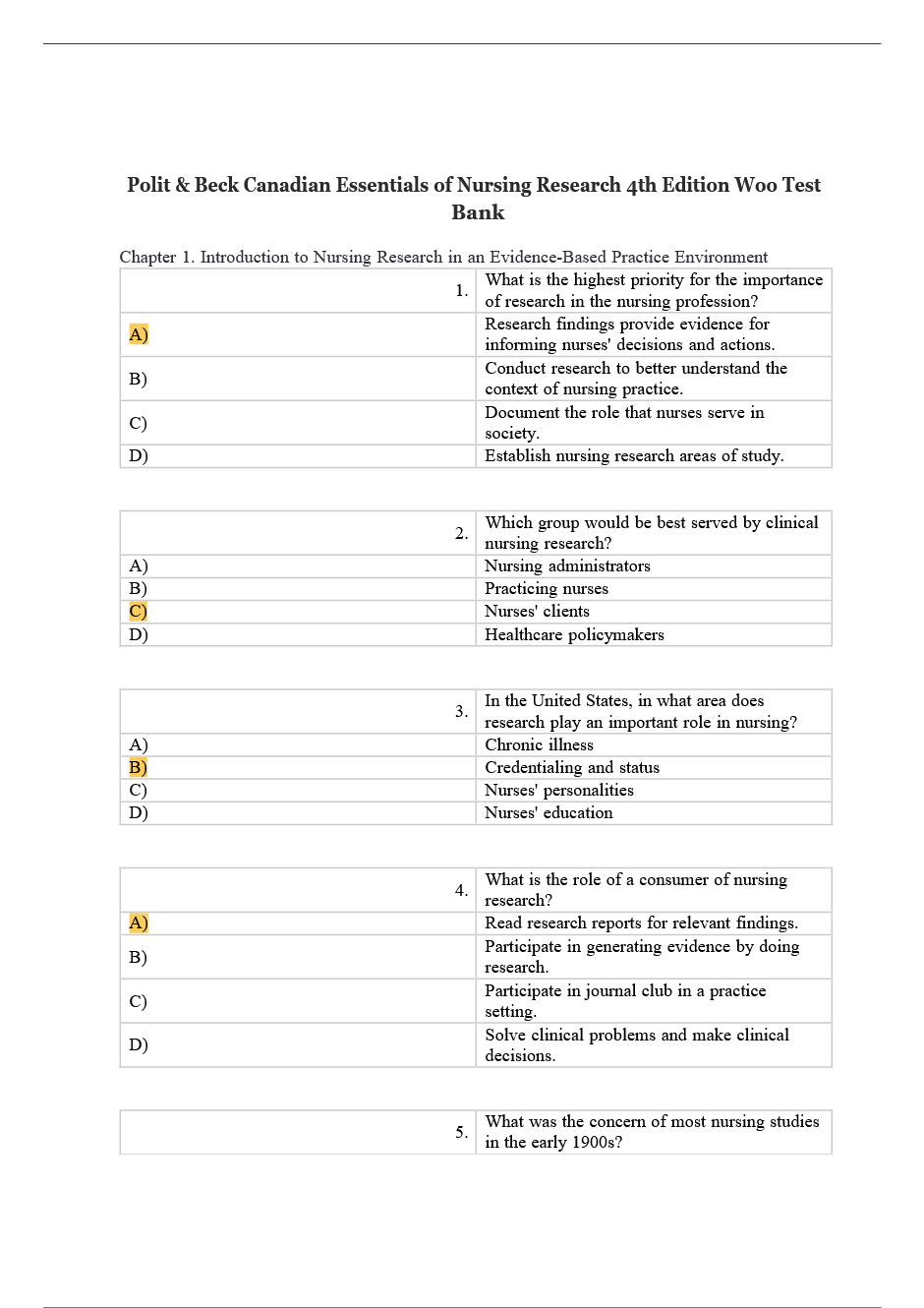
This test bank, built directly from the 4th edition, gives you focused practice applying research concepts the way Canadian nursing programs actually teach them.
At Test Banks Hub, we built this resource because Canadian students deserve content that reflects their specific curriculum, not generic research questions borrowed from unrelated textbooks.
Why Nursing Research Intimidates Even Strong Students
Research courses ask you to think completely differently than clinical courses do.
Here’s what makes this content uniquely challenging:
- Statistical concepts feel abstract and disconnected from bedside nursing
- Research terminology reads like a foreign language initially
- Study designs multiply in complexity the deeper you go
- Critically appraising research requires skills most students haven’t practiced
- Canadian healthcare research contexts differ from American or international content
This test bank addresses these challenges directly, using terminology, examples, and regulatory frameworks relevant to Canadian nursing practice specifically.
What This Test Bank Covers
Every major content area from the textbook receives comprehensive question coverage.
Foundations of Nursing Research
- Evidence-based practice in the Canadian healthcare context
- Quantitative versus qualitative research paradigms
- Research ethics and Canadian Tri-Council Policy Statement guidelines
- Literature review and search strategies
Quantitative Research Approaches
- Experimental and quasi-experimental designs
- Non-experimental and correlational studies
- Sampling methods and sample size considerations
- Data collection instruments and measurement
Quantitative Data Analysis
- Descriptive statistics
- Inferential statistics and hypothesis testing
- Interpreting p-values and confidence intervals
- Common statistical tests used in nursing research
Qualitative Research Approaches
- Phenomenology, grounded theory, and ethnography
- Qualitative sampling and data collection
- Thematic analysis and coding processes
- Establishing trustworthiness in qualitative research
Mixed-Methods and Systematic Reviews
- Combining quantitative and qualitative approaches
- Systematic review methodology
- Meta-analysis interpretation
- Clinical practice guideline development
Applying Research To Canadian Nursing Practice
- Knowledge translation frameworks
- Implementing evidence-based change
- Research utilization barriers specific to Canadian healthcare settings
- Disseminating research findings
Every question includes a full rationale explaining research concepts in accessible language, with Canadian healthcare examples woven throughout where relevant.
Question Formats You’ll Practice
- Multiple choice questions testing research methodology comprehension
- Scenario-based questions applying concepts to Canadian nursing contexts
- Select-all-that-apply items covering complex research principles
- Critical appraisal questions evaluating study quality
This variety mirrors how Canadian nursing research courses structure their assessments.
Five Sample Questions From This Test Bank
Here’s a preview of what’s included.
Question 1
A researcher wants to study the lived experience of Indigenous patients navigating the Canadian healthcare system. Which research approach would be most appropriate?
A) Randomized controlled trial
B) Qualitative phenomenological study
C) Cross-sectional survey
D) Case-control study
Correct Answer: B
Rationale: Phenomenological research explores the lived experiences of individuals regarding a particular phenomenon. This approach is well-suited for understanding subjective experiences, such as navigating healthcare systems, especially when cultural context and personal meaning are central to the research question.
Question 2
According to the Tri-Council Policy Statement, which principle requires researchers to minimize potential harm to research participants?
A) Justice
B) Concern for welfare
C) Respect for persons
D) Scientific merit
Correct Answer: B
Rationale: Concern for welfare is one of the three core principles outlined in the Tri-Council Policy Statement (TCPS2), governing research ethics in Canada. This principle requires researchers to protect participants from harm and promote their wellbeing throughout the research process.
Question 3
A study reports a p-value of 0.04 when comparing two nursing interventions. What does this result indicate?
A) The intervention is clinically significant
B) There is a 4% probability the observed difference occurred by chance alone
C) The sample size was too small
D) The null hypothesis is definitely true
Correct Answer: B
Rationale: A p-value of 0.04 indicates a 4% probability that the observed difference between groups occurred due to chance, assuming the null hypothesis is true. Since this falls below the conventional 0.05 threshold, the result is considered statistically significant, though statistical significance doesn’t automatically confirm clinical significance.
Question 4
Which sampling method would best ensure representation from various provinces when studying nursing workforce issues across Canada?
A) Convenience sampling
B) Stratified random sampling
C) Purposive sampling
D) Snowball sampling
Correct Answer: B
Rationale: Stratified random sampling divides the population into subgroups, such as provinces, before randomly sampling within each stratum. This method ensures adequate representation across all groups, making it ideal for studies requiring geographic or demographic diversity, such as pan-Canadian workforce research.
Question 5
Which knowledge translation strategy is most likely to support sustained evidence-based practice change within a Canadian hospital setting?
A) Distributing a single research article via email
B) Multifaceted approach including education, opinion leaders, and audit and feedback
C) Posting new protocols without additional support
D) Relying solely on annual mandatory training sessions
Correct Answer: B
Rationale: Research on knowledge translation consistently shows that multifaceted implementation strategies, combining education, engaged opinion leaders, and ongoing feedback, produce more sustained practice change than single, isolated interventions. This reflects current understanding of how evidence-based change actually takes hold in clinical settings.
How To Study This Material Effectively
Research content rewards active engagement over passive reading.
Don’t just read definitions, apply them.
After learning about phenomenology, identify a nursing research question it would suit. This active application cements understanding faster than memorization alone.
Practice statistical interpretation repeatedly.
P-values, confidence intervals, and significance testing become intuitive only through repeated exposure. Don’t skip these questions even if they feel uncomfortable initially.
Connect concepts to Canadian healthcare examples specifically.
Since this textbook and test bank focus on Canadian contexts, practice thinking through research questions relevant to provincial healthcare systems, Indigenous health, and Canadian regulatory frameworks.
Review research ethics principles carefully.
Tri-Council Policy Statement content appears consistently on Canadian nursing research exams. Dedicate focused study time to these principles specifically.
Create comparison charts for research designs.
Experimental versus quasi-experimental. Phenomenology versus grounded theory. Side-by-side comparisons clarify distinctions faster than isolated study.
Who This Test Bank Is Built For
This resource supports:
- BScN and BSN students in Canadian nursing programs
- Nursing students specifically using Woo’s Canadian adaptation of Polit and Beck
- RN-to-BScN bridge program students
- Graduate nursing students needing research methodology review
- Canadian nursing instructors building exam content
Whether you’re working through a required research methods course or reviewing before comprehensive exams, this test bank supports your specific Canadian curriculum.
Why Students Choose Test Banks Hub
We build test banks that match your actual course content, not generic international versions.
- Detailed rationales explaining research concepts in accessible language
- Canadian-specific content including TCPS2 ethics and healthcare system context
- Direct alignment with the 4th edition textbook structure
- Instant digital access after purchase
- Affordable pricing built for Canadian nursing student budgets
Research competence matters throughout your entire nursing career, from evaluating new treatment protocols to potentially conducting your own studies. This test bank builds that foundation using content relevant to where you’ll actually practice.
Frequently Asked Questions
Is this test bank based on the actual Woo Canadian 4th edition textbook?
Yes. Every question aligns with chapters, terminology, and Canadian-specific content found in Polit & Beck Canadian Essentials of Nursing Research, 4th Edition.
How is this different from the American Polit and Beck test bank?
This test bank reflects Canadian-specific content, including Tri-Council Policy Statement ethics guidelines, Canadian healthcare system examples, and terminology used specifically in Canadian nursing education, rather than American regulatory frameworks.
Will this help me understand statistics, even if I’m not a math person?
Yes. Rationales explain statistical concepts in plain language, focusing on what results mean for nursing practice rather than complex mathematical derivations.
Does this cover Indigenous health research considerations?
Yes. Given the importance of culturally appropriate research methods within Canadian healthcare, several questions address considerations relevant to research involving Indigenous populations and communities.
How is this test bank delivered after purchase?
You receive instant digital access immediately after checkout.
Is this suitable for graduate nursing students, or only undergraduate?
While designed primarily for undergraduate BScN and BSN programs, graduate students often find this test bank useful for foundational review before advanced research coursework.
Does this test bank address knowledge translation specifically?
Yes. Knowledge translation and evidence-based practice implementation within Canadian healthcare settings receive dedicated question coverage, reflecting their importance in Canadian nursing curricula.
How many questions are included in this test bank?
The test bank includes several hundred questions spanning all major research methodology topics covered in the textbook.
Start Building Research Competence Today
Nursing research doesn’t have to feel disconnected from real practice, especially when your study materials reflect the actual healthcare system you’re preparing to work within.
This test bank gives you that connection. Real Canadian healthcare contexts. Detailed rationales explaining research reasoning clearly. Complete alignment with your textbook.
Get instant access today and start building the research competence your future Canadian nursing practice depends on.


Martini508 –
Good
Marcus –
Affordable but top quality