Are you studying advanced pharmacology? Are you preparing for your advanced practice nursing (APN) or physician assistant (PA) exams? Advanced pharmacotherapeutics can feel overwhelming. You have to memorize thousands of drug names. You must understand complex mechanisms of action. You also need to make correct clinical decisions for your patients.
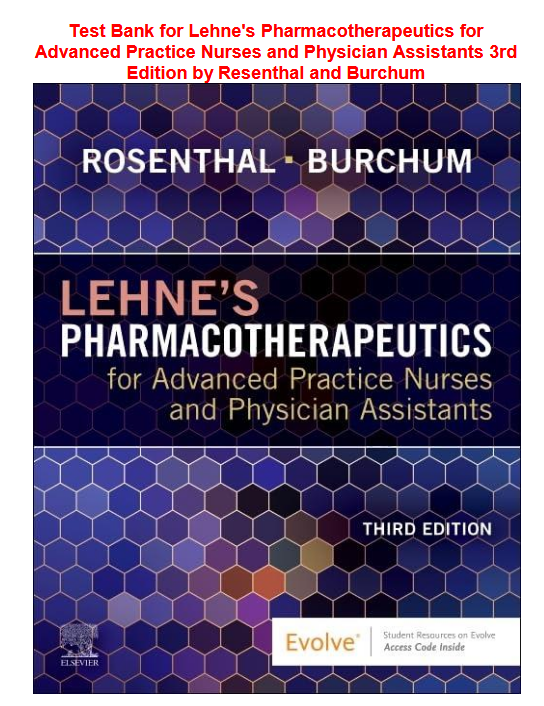
This Test Bank for Lehne’s Pharmacotherapeutics for Advanced Practice Nurses and Physician Assistants (3rd Edition) by Laura Rosenthal and Jacqueline Burchum is your best study tool. It helps you learn faster. It helps you test your knowledge with real exam questions. Walk into your exam room feeling confident and fully prepared.
Why You Need This Test Bank
Reading a massive pharmacology textbook takes a lot of time. Simply re-reading your notes is not enough to pass tough exams. To score high grades, you must test yourself. You need active recall. Practice questions help you think like a prescribing clinician.
Here is why APN and PA students rely on this test bank:
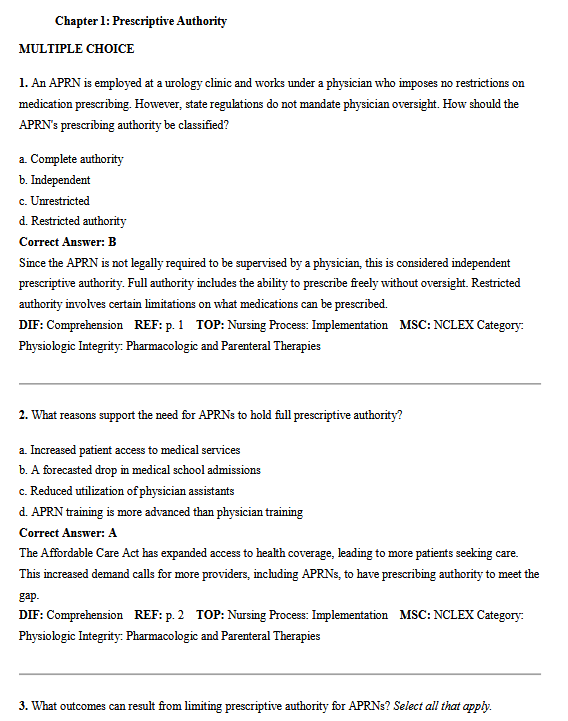
- Complete Coverage: Includes practice questions for every chapter in the 3rd edition.
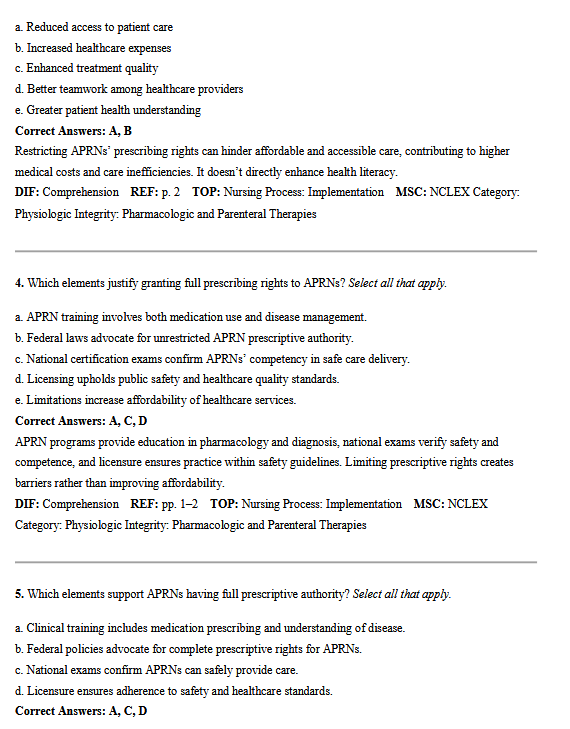
- Realistic Exam Style: Questions match the format of actual graduate-level pharmacology exams and board certifications.
- Detailed Rationales: Every question includes clear explanations. Learn why an answer is right and why other options are wrong.
- Instant Access: Get your digital download immediately after purchase. Study on your phone, tablet, or laptop anytime.
- Smart Study Sessions: Find your weak areas quickly. Focus your time on the topics you need to practice most.
What Makes the 3rd Edition Test Bank Unique?
The 3rd edition of Rosenthal and Burchum’s text focuses heavily on advanced clinical decision-making. Prescribing medication requires more than basic drug facts. You must know how to choose the right drug for unique patient populations. You need to understand drug interactions, black box warnings, and side effect management.
This test bank reflects the latest clinical guidelines. It focuses on practical drug therapy for advance practice providers. Unlike generic pharmacology study guides, this official test bank follows the exact structure of your textbook.
Key Features Included:
- Chapter-by-Chapter Alignment: Easily match your lecture topics with target practice questions.
- Case-Based Questions: Test your real-world clinical judgment with realistic patient scenarios.
- Board-Style Preparation: Prepare for NP and PA national board certification exams early.
- Searchable PDF Format: Quickly search for specific drug classes, diseases, or side effects.
Who Is This Product For?
This study guide is built specifically for:
- Nurse Practitioner (NP) Students: Master advanced pharmacology for Family, Adult-Gero, Acute Care, or Psychiatric specialties.
- Physician Assistant (PA) Students: Prepare for pharmacotherapeutics courses and PANCE exam pharmacology questions.
- Clinical Nurse Specialists (CNS): Sharpen your drug therapy knowledge for advanced practice.
- Instructors and Tutors: Save time writing exams, homework assignments, and practice quizzes.
Chapter Overview Covered in the Test Bank
This resource covers all core drug classes and therapeutic topics in the 3rd edition, including:
- Prescribing Principles: Prescriptive authority, pharmacokinetics, pharmacodynamics, and pharmacogenomics.
- Autonomic and Central Nervous System Drugs: Cholinergic agonists, adrenergic antagonists, opioids, local anesthetics, and psychotropics.
- Cardiovascular and Renal Drugs: Antihypertensives, heart failure drugs, antiarrhythmics, lipid-lowering agents, and diuretics.
- Endocrine System Drugs: Diabetes management, thyroid hormones, and corticosteroid therapy.
- Respiratory and GI Therapeutics: Asthma, COPD, peptic ulcer disease, and antiemetic therapies.
- Infectious Diseases: Antibiotics, antifungals, antivirals, and resistance management.
- Special Populations: Safe prescribing in pediatric, geriatric, pregnant, and lactating patients.
5 Sample Questions with Answers and Rationales
Try these sample questions to see the quality and style of this test bank.
Question 1
An advanced practice nurse is prescribing an ACE inhibitor for a patient with hypertension and heart failure. Which adverse effect requires immediate discontinuation of the drug and medical emergency intervention?
- A) Dry cough
- B) Angioedema
- C) Mild hyperkalemia
- D) Dizziness when standing
Correct Answer: B) Angioedema
Rationale: Angioedema is a life-threatening allergic reaction caused by ACE inhibitors. It involves swelling of the lips, tongue, and pharynx, which can block the airway. The drug must be stopped immediately. Dry cough is common but not dangerous. Mild hyperkalemia and dizziness require monitoring but are not immediate life-threatening emergencies.
Question 2
A 68-year-old patient with type 2 diabetes and stage 3 chronic kidney disease needs a second-line antidiabetic agent. Which class of medication provides renal protection and reduces cardiovascular risk in this patient?
- A) Sulfonylureas
- B) SGLT2 inhibitors
- C) Alpha-glucosidase inhibitors
- D) Meglitinides
Correct Answer: B) SGLT2 inhibitors
Rationale: SGLT2 inhibitors (such as empagliflozin and dapagliflozin) slow the progression of chronic kidney disease and lower cardiovascular event rates in patients with type 2 diabetes. Sulfonylureas increase hypoglycemia risk, especially with kidney impairment.
Question 3
When initiating warfarin therapy for a patient with deep vein thrombosis (DVT), why is heparin or low-molecular-weight heparin co-administered during the first few days?
- A) Warfarin takes several days to reach therapeutic anticoagulation levels.
- B) Heparin prevents the severe gastrointestinal side effects caused by warfarin.
- C) Warfarin decreases the clearance rate of heparin in the liver.
- D) Heparin works as an antidote if INR levels rise too quickly.
Correct Answer: A) Warfarin takes several days to reach therapeutic anticoagulation levels.
Rationale: Warfarin inhibits vitamin K-dependent clotting factors, but existing factors must degrade before full anticoagulation occurs. This takes 3 to 5 days. Fast-acting heparin is given as bridge therapy to prevent blood clots while waiting for warfarin to reach a therapeutic INR level.
Question 4
An advanced practice provider is prescribing a macrolide antibiotic for a patient with community-acquired pneumonia. What baseline diagnostic test should be reviewed if the patient has a history of cardiac arrhythmia?
- A) Serum creatinine
- B) Electrocardiogram (ECG)
- C) Liver enzymes
- D) Complete blood count (CBC)
Correct Answer: B) Electrocardiogram (ECG)
Rationale: Macrolide antibiotics (such as azithromycin and erythromycin) can prolong the QT interval on an ECG. This increases the risk of fatal ventricular arrhythmias like Torsades de Pointes. Reviewing a baseline ECG is critical in patients with cardiac risk factors.
Question 5
Which physiological change in elderly patients leads to an increased risk of toxicity from highly lipophilic (fat-soluble) drugs?
- A) Increased total body water
- B) Decreased body fat percentage
- C) Increased body fat percentage and decreased total body water
- D) Increased glomerular filtration rate (GFR)
Correct Answer: C) Increased body fat percentage and decreased total body water
Rationale: As people age, body fat increases while total body water decreases. Lipophilic drugs distribute more widely into fat tissue. This prolongs their half-life and increases the risk of drug accumulation and toxicity in older adults.
Frequently Asked Questions (FAQs)
What file format is the test bank?
The test bank comes as a digital PDF file (or Microsoft Word document). You can open and read it on iPhones, Android phones, iPads, tablets, Macs, and Windows PCs.
Is this a physical book?
No. This product is a digital study guide download. No physical book will be shipped to your house. You get immediate access online.
Is this the official test bank for the 3rd edition by Rosenthal and Burchum?
Yes. It features practice questions and answers designed specifically for Lehne’s Pharmacotherapeutics for Advanced Practice Nurses and Physician Assistants (3rd Edition).
How do I get my file after buying?
As soon as your payment clears, you will see a download button on your screen. You will also receive an email with your direct download link.
Can I search for specific drugs in the file?
Yes. The PDF is fully searchable. Press Ctrl+F (or Cmd+F on Mac) to search for any drug name, disease, or chapter topic in seconds.
Ace Your Advanced Pharmacology Exams Today!
Don’t wait until exam night to test your knowledge. Give yourself the best tool to succeed in your graduate studies. Download the Test Bank for Lehne’s Pharmacotherapeutics for Advanced Practice Nurses and Physician Assistants (3rd Edition) today and pass your exams with confidence!


KimberlyGreg –
I feel extremely lucky to have come across this test bank.
Faith B. –
The class initially looked tough but this test bank is making things click more easily.
Henry Wilcox –
perfect for my studies
Martini508 –
exactly what I’ve been looking for
terryanne234 –
I can’t thank you enough for making this available very cheaply