Family health nursing asks you to zoom out. Instead of focusing on just one patient, you’re thinking about the whole family unit as the client. That shift in perspective trips a lot of students up at first. It’s one thing to assess an individual. It’s another to think through how illness, stress, culture, and communication ripple through an entire family system.
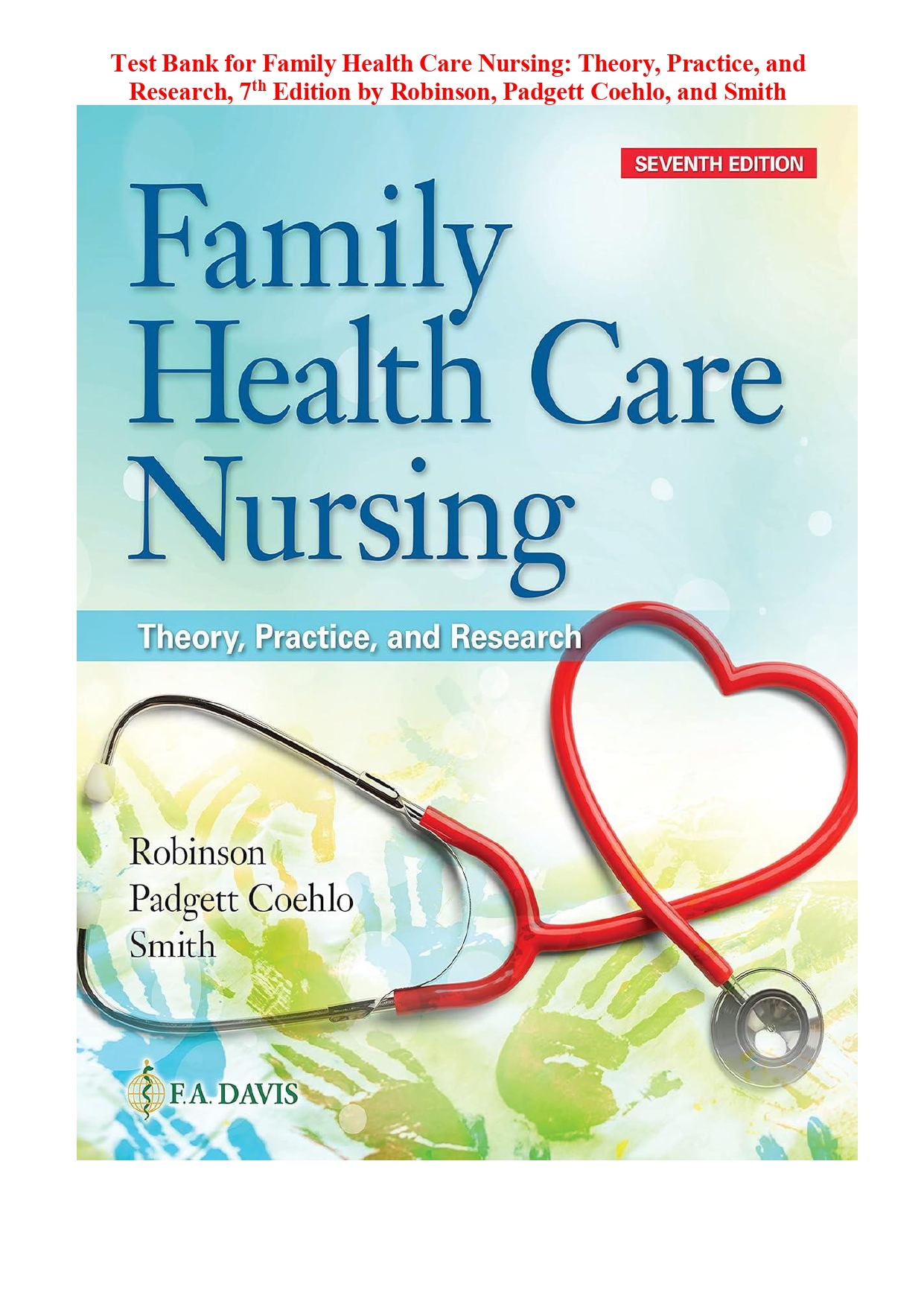
This test bank is built to help with that shift. It follows the 7th edition of Family Health Care Nursing: Theory, Practice, and Research by Joanna Rowe Kaakinen, Deborah Padgett Coehlo, Rose Steele, and Melissa Robinson, chapter by chapter. Whatever unit you’re covering in class, there’s a set of matching practice questions ready for you.
This isn’t meant to replace your textbook. It’s meant to help the concepts actually stick. Reading about family systems theory is one thing. Being able to apply it to a scenario on an exam is a different skill entirely, and that’s exactly what practicing with these questions builds.
What Is a Test Bank?
A test bank is a large collection of practice questions built around a specific textbook. Instructors frequently pull from resources like this when writing their actual exams. That means practicing with this test bank gets you familiar with the tone, structure, and difficulty level your real exam will likely use.
This resource spans the full range of the 7th edition, including family nursing theories, family assessment models, communication within family systems, family health promotion, and how families experience and cope with illness across different life stages.
Why Students Use Test Banks for This Course
Family health nursing blends theory with real-world application in a way that can feel abstract at first. A test bank helps bridge that gap through repeated practice. Here’s how.
You get comfortable applying theory to scenarios. Exams in this course often describe a family situation and ask you to identify the right theoretical framework or nursing approach. Practicing with similar questions trains your brain to make that connection quickly.
You catch your weak spots early. Maybe family systems theory feels solid, but family assessment tools still feel fuzzy. Practice questions show you exactly where to focus your next study session.
You walk into the exam more confident. Familiarity with question style reduces anxiety. When the real test doesn’t feel like unfamiliar territory, you think more clearly under pressure.
You study more efficiently. Instead of rereading dense chapters and hoping the right details stick, you get organized, focused review material.
What This Test Bank Includes
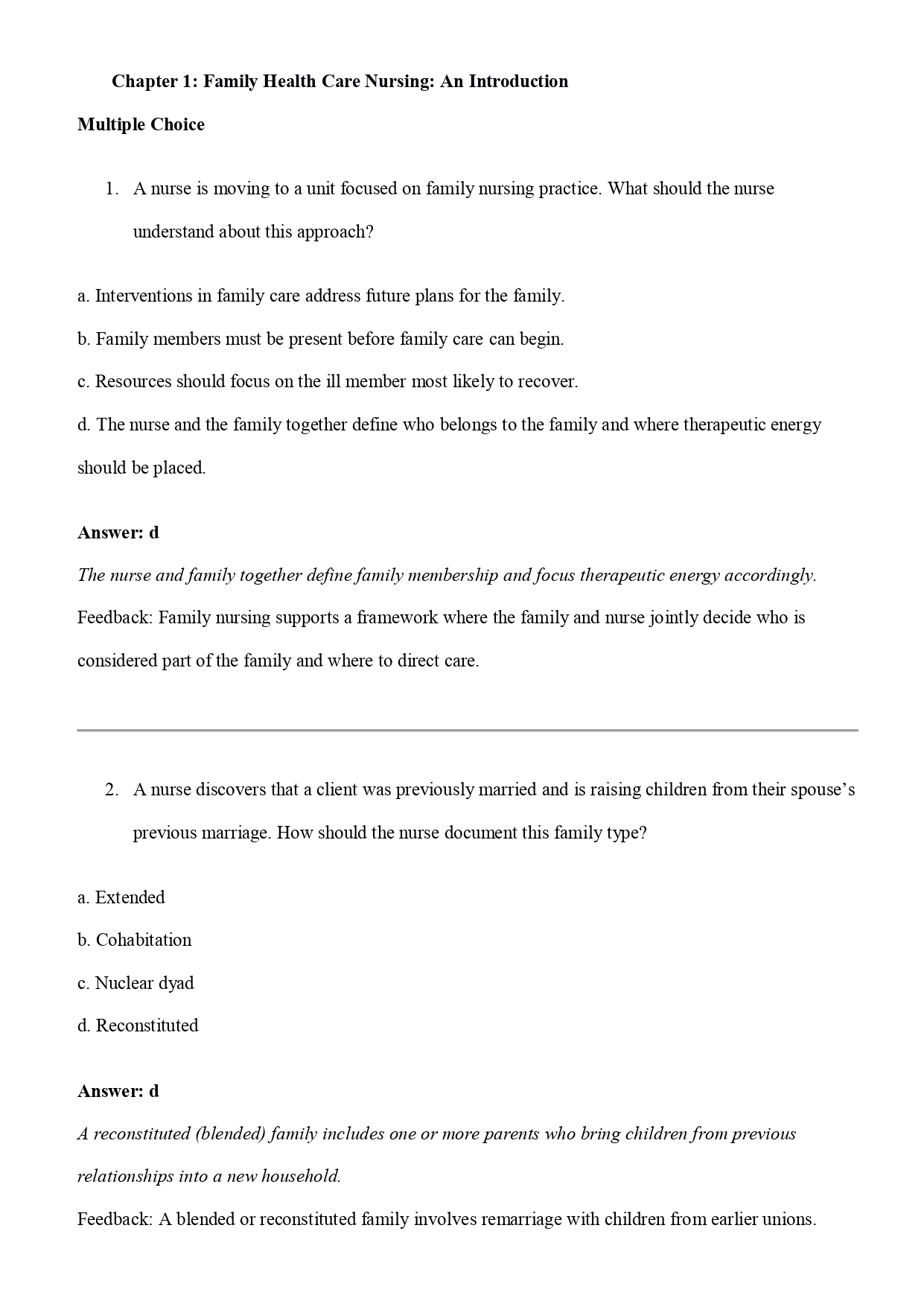
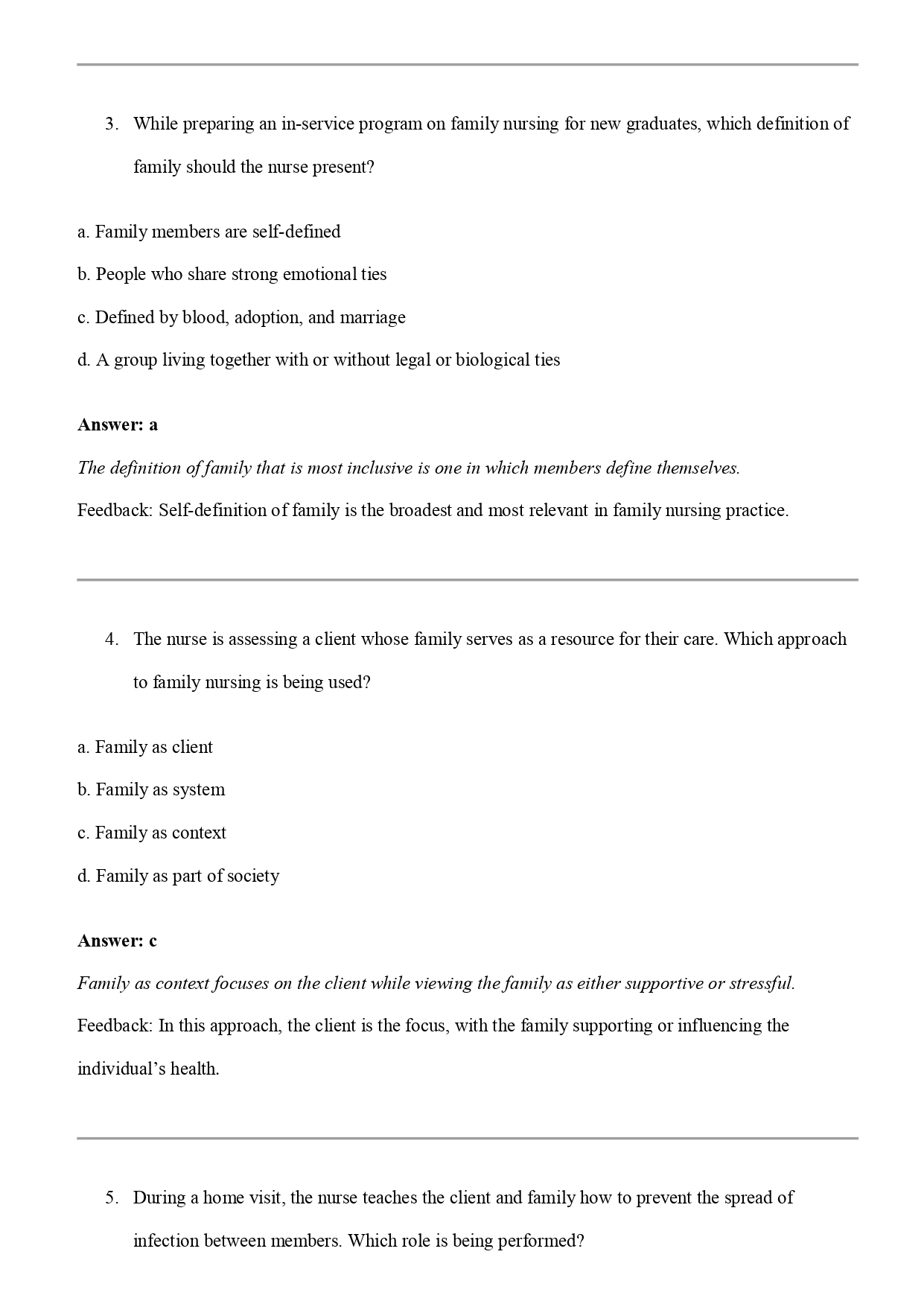
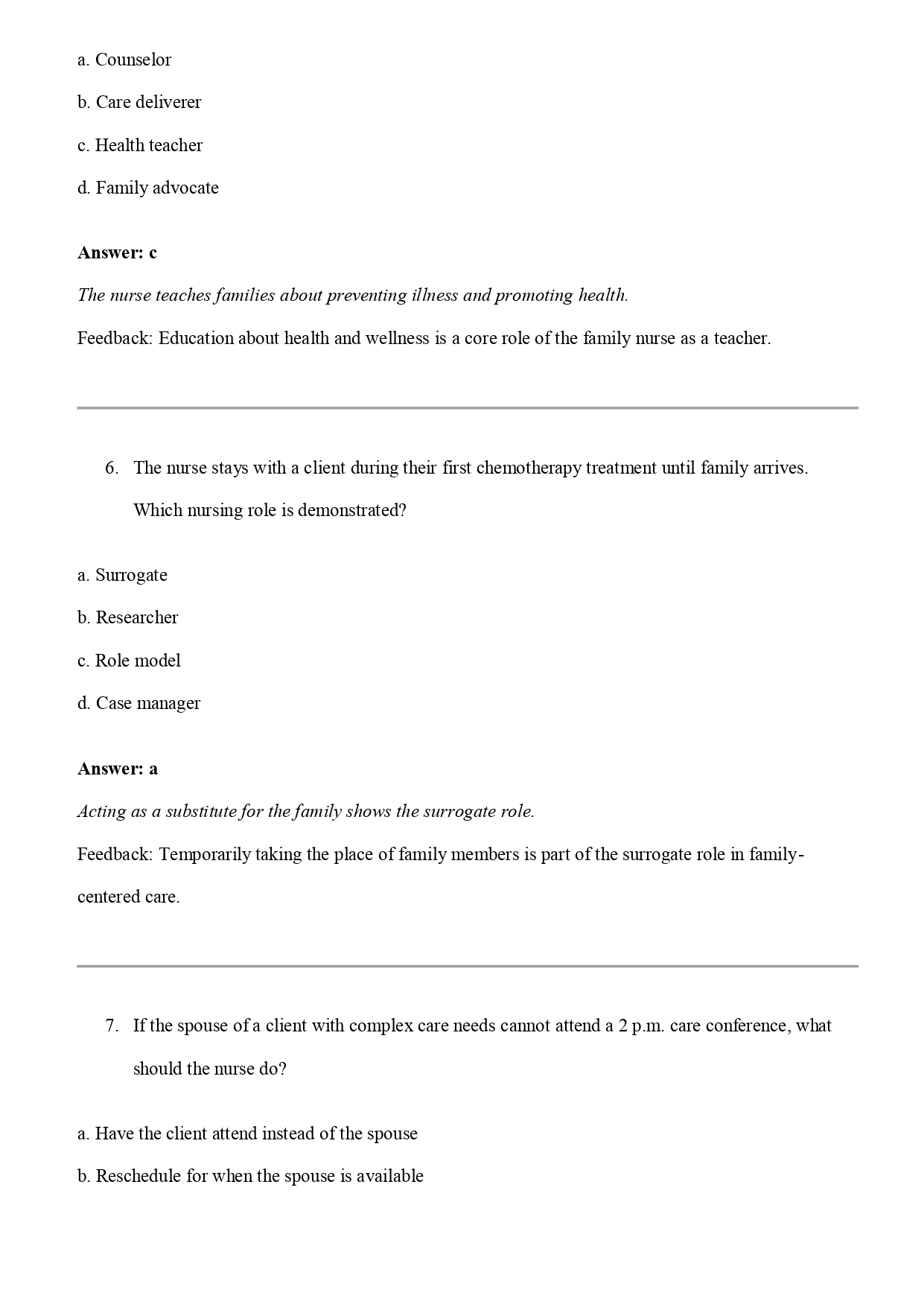
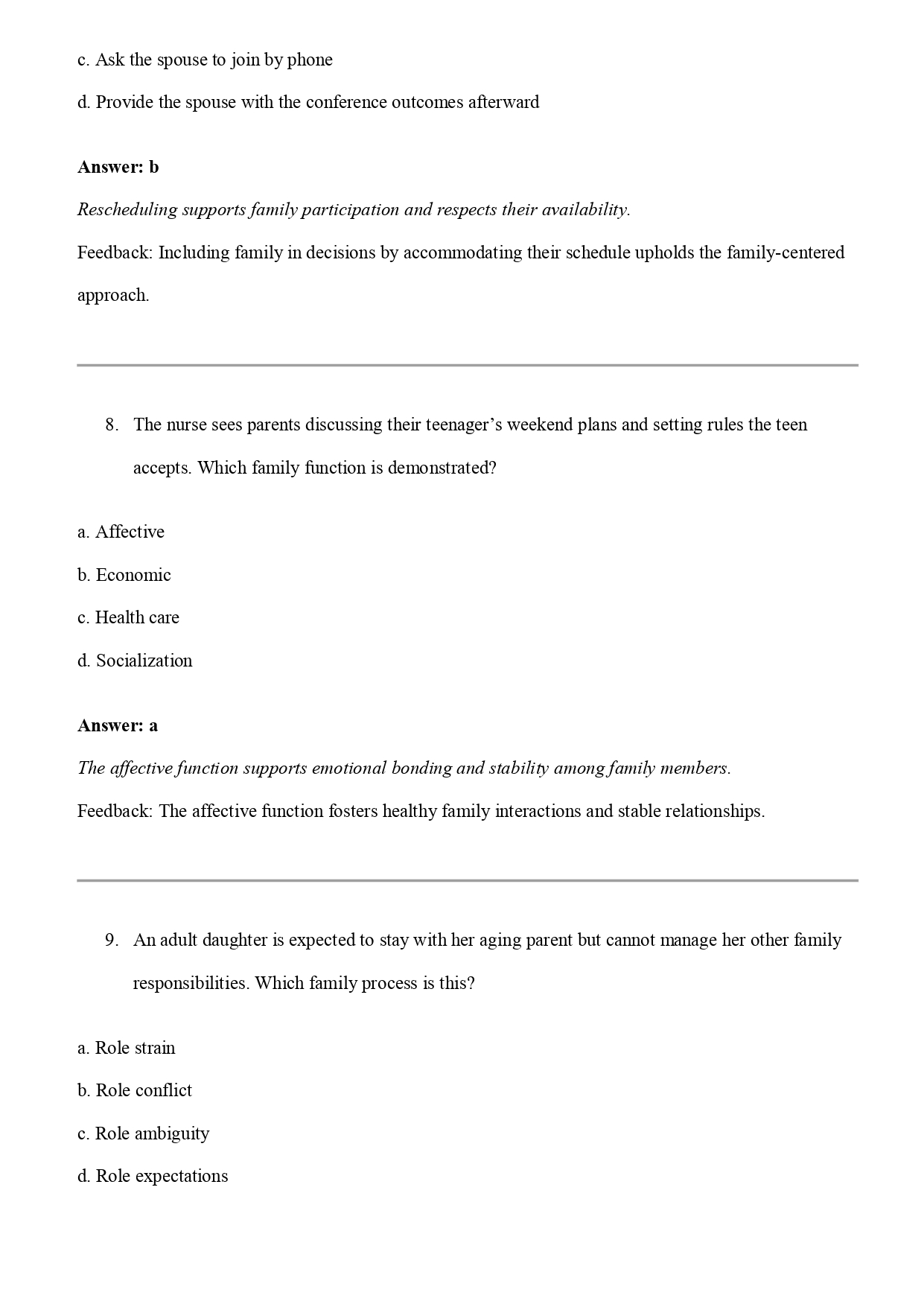
This resource contains multiple-choice questions organized by chapter, each with a correct answer and a rationale explaining why that answer fits best. The rationale matters as much as the answer itself. In family nursing, more than one answer choice can sound reasonable at first glance. Understanding why one is the strongest choice is what actually prepares you for real practice, not just for passing a test.
Topics covered include:
- Family nursing theories and conceptual models
- Family systems and structural-functional theory
- Family assessment tools and genograms
- Communication patterns within families
- Family health promotion and disease prevention
- Family coping with acute and chronic illness
- Cultural influences on family health
- Family caregiving and its impact
- Families across the life span, from childbearing to aging
- Research methods applied to family nursing practice
Sample Questions
Here are five sample questions in the same style you’ll find throughout the test bank. Try answering them before checking the rationale.
Question 1
A nurse is using a tool that visually maps a family’s structure, relationships, and health history across three generations. Which tool is the nurse using?
A. Ecomap
B. Genogram
C. Care plan
D. Family APGAR
Correct Answer: B. Genogram
Rationale: A genogram maps family structure and relationships across generations, often including health history, which helps identify patterns relevant to care. An ecomap shows a family’s connections to outside systems like work or community, not generational history. A care plan outlines interventions, not family structure. The Family APGAR is a brief screening tool for family function, not a generational map.
Question 2
A family is adjusting to a new diagnosis of a chronic illness in one of its members. According to family systems theory, which statement best reflects how this event affects the family?
A. Only the diagnosed member experiences meaningful change
B. Changes in one family member affect the entire family system
C. Family roles remain fixed regardless of illness
D. Family systems theory does not apply to chronic illness situations
Correct Answer: B. Changes in one family member affect the entire family system
Rationale: Family systems theory holds that the family functions as an interconnected unit, so a change affecting one member ripples out and affects the whole system. The idea that only the diagnosed member is affected contradicts this core principle. Roles often shift during illness rather than staying fixed. Family systems theory is commonly applied to chronic illness situations specifically because of this interconnected effect.
Question 3
A nurse is assessing a family’s connections to outside resources, including their workplace, school system, and community support groups. Which assessment tool is most appropriate?
A. Genogram
B. Ecomap
C. Family health tree
D. Developmental timeline
Correct Answer: B. Ecomap
Rationale: An ecomap illustrates a family’s relationships and connections with outside systems and resources, making it the right tool for this kind of assessment. A genogram focuses on internal family structure and generational history rather than outside connections. A family health tree tracks medical history. A developmental timeline tracks life stage transitions, not external resource connections.
Question 4
A nurse is working with a family from a cultural background that values collective decision-making over individual choice. Which approach best reflects culturally sensitive family nursing care?
A. Insist on speaking only with the individual patient
B. Disregard family input to protect patient autonomy at all times
C. Include relevant family members in care discussions and decisions
D. Assume all families from this background think identically
Correct Answer: C. Include relevant family members in care discussions and decisions
Rationale: Culturally sensitive care means recognizing and respecting a family’s values around decision-making, which may include involving family members more heavily than is typical in individually focused care models. Insisting on speaking only with the individual ignores the family’s cultural values. Disregarding family input entirely fails to respect those values. Assuming uniformity across an entire cultural group overlooks individual family differences, which is its own form of bias.
Question 5
A researcher wants to understand how families experience caregiving for a child with a complex medical condition, focusing on personal meaning and lived experience. Which research method is most appropriate?
A. Randomized controlled trial
B. Qualitative research
C. Cross-sectional survey
D. Meta-analysis
Correct Answer: B. Qualitative research
Rationale: Qualitative research is designed to explore lived experience, personal meaning, and depth of perspective, which fits this research goal closely. Randomized controlled trials test interventions using numerical outcomes, not lived experience. Cross-sectional surveys gather data at a single point in time, typically in a more structured, less in-depth format. A meta-analysis combines findings from multiple existing studies rather than exploring new personal experiences directly.
Who This Test Bank Is For
This resource works well for nursing students taking a family health nursing course as part of an undergraduate or graduate program. It’s also useful for students in community health or population health courses that touch on family-centered care concepts. Instructors may find it helpful too, as a quick source for building quizzes or exam material.
How to Study With This Test Bank
Don’t just read through the questions passively. Quiz yourself for real. Cover the answer choices, pick one, then check the rationale. When you get something wrong, slow down on it. Ask yourself what made the correct answer the stronger choice. That reflection is where the real learning happens, especially in a subject like this where more than one answer can sound plausible.
Working through the material chapter by chapter tends to work better than trying to review everything in one long session. Spacing your review out over several days helps family nursing concepts actually stick, rather than fading right after the exam.
Instant Digital Access
This test bank is delivered as a digital file, so there’s no shipping delay. Once your order is complete, you can download it and start studying immediately. It’s designed to work alongside your textbook and class notes, not replace either one.
Frequently Asked Questions
Is this the same as the textbook?
No. This is a test bank, meaning a set of practice questions. It’s meant to be used together with the textbook, not instead of it.
Does every question include a rationale?
Yes. Each question comes with the correct answer and an explanation of why that answer is the strongest choice.
Will this help with exams beyond this one course?
It can. Family-centered care concepts show up across community health, pediatric, and maternal health coursework, so the knowledge tends to carry over.
Is this test bank matched to the 7th edition specifically?
Yes. The questions are organized around the chapters and content found in the 7th edition of Family Health Care Nursing: Theory, Practice, and Research by Robinson, Padgett Coehlo, and Smith.
How do I get the file after purchasing?
You’ll receive instant digital access right after checkout, so you can start studying right away.
Can instructors use this resource as well?
Yes. Instructors often reference test banks when creating quizzes, exams, or class review material.
Is using a test bank considered cheating?
No, as long as it’s used for studying and practice rather than during an actual exam. Reviewing practice questions to strengthen understanding is a common and accepted study method among nursing students.


Rosemary R –
Perfectly organized
Mary Kesh –
Quality content