Studying maternity and pediatric nursing can feel like a lot. There’s so much to remember. Labor stages. Newborn assessments. Growth milestones. Medication dosages for tiny bodies. It’s easy to feel buried under it all.
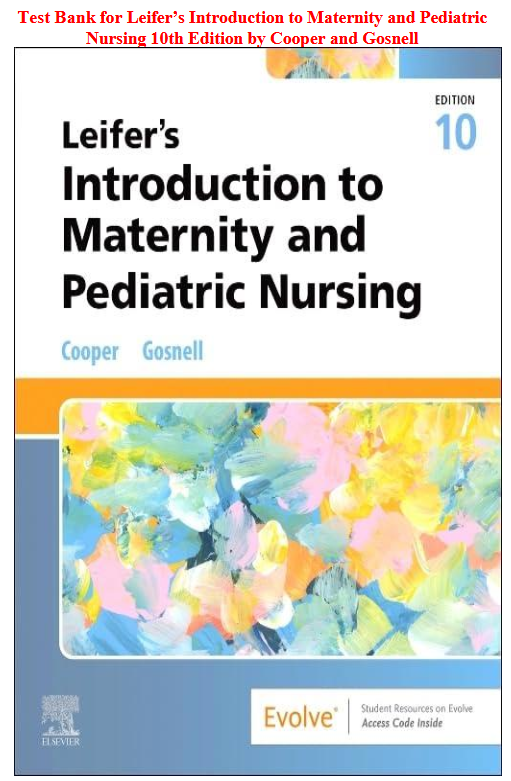
That’s where this test bank comes in. It’s built to match the 10th edition of Leifer’s Introduction to Maternity and Pediatric Nursing by Kathryn Cooper and Kitty Cashion Gosnell. If you’re using this textbook in class, this resource lines up chapter by chapter with what you’re already learning.
This isn’t a summary. It isn’t a shortcut around real studying. It’s a practice tool. Think of it like a gym for your brain before the real test day. You get to see how questions are actually phrased. You get to test your recall under pressure. And you get instant feedback so you know exactly where you stand.
What Is a Test Bank, Exactly?
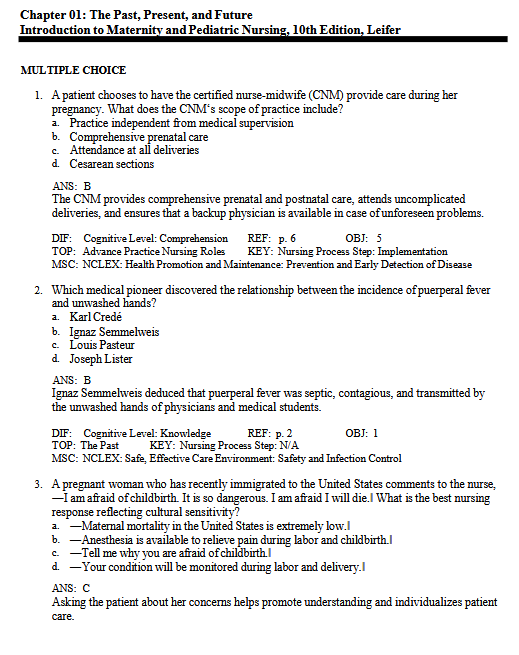
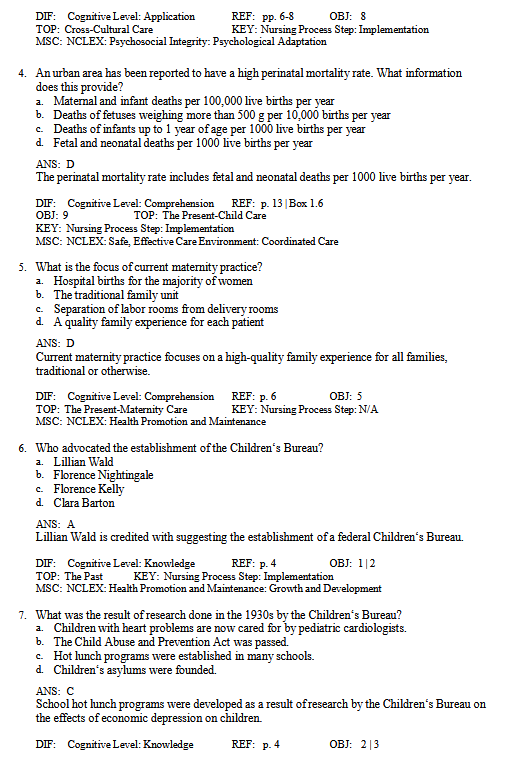
A test bank is a large collection of practice questions tied to a specific textbook. Instructors often use these questions to build real exams. That means when you practice with a test bank, you’re training on the same style, format, and level of difficulty you’ll actually face.
This test bank covers every major chapter in the 10th edition. That includes maternal nursing care, labor and delivery, postpartum recovery, newborn care, and pediatric nursing across every stage of childhood. It also touches on family-centered care, cultural considerations, and safety practices, since those show up constantly on nursing exams.
Why Nursing Students Use Test Banks
Nursing school moves fast. You don’t always have time to reread every chapter twice. A test bank helps you study smarter, not just longer. Here’s why students reach for one.
You learn how questions are worded. Nursing exams love tricky phrasing. Words like “most appropriate” or “first action” change the whole meaning of a question. Practicing with real exam-style questions trains your brain to catch these details.
You find your weak spots fast. Maybe you’re solid on postpartum care but shaky on pediatric growth charts. A test bank shows you exactly where to focus your next study session, instead of wasting time on things you already know.
You build test-day confidence. The more familiar the question style feels, the calmer you’ll be when the real exam starts. Confidence matters more than people admit. A calm brain remembers more.
You save time. Instead of writing your own practice questions or hunting through the textbook for review material, everything is already organized for you.
What’s Inside This Test Bank
This resource includes hundreds of multiple-choice questions organized by chapter. Every question comes with the correct answer and a rationale that explains why it’s correct — and often why the other choices are wrong too. That rationale part matters. Memorizing an answer doesn’t help you on exam day if the question is worded differently. Understanding why an answer is correct actually sticks.
Topics covered include:
- Antepartum, intrapartum, and postpartum nursing care
- High-risk pregnancy conditions
- Labor stages and pain management
- Newborn assessment and care
- Breastfeeding and infant nutrition
- Growth and development across childhood
- Pediatric illness and hospitalization
- Family-centered nursing approaches
- Safety, ethics, and cultural sensitivity in maternity and pediatric care
Sample Questions
Here are five sample questions similar to what you’ll find inside the test bank. Try answering before checking the rationale.
Question 1
A nurse is caring for a woman in the first stage of labor. The nurse notes contractions occurring every 3 minutes, lasting 60 seconds, with moderate intensity. Which phase of labor is this client most likely in?
A. Latent phase
B. Active phase
C. Transition phase
D. Second stage
Correct Answer: B. Active phase
Rationale: The active phase of labor typically involves contractions every 2 to 4 minutes lasting 45 to 60 seconds with moderate to strong intensity. The latent phase has milder, more irregular contractions. Transition involves stronger, closer contractions, usually every 1.5 to 2 minutes. The second stage begins once the cervix is fully dilated, which is not indicated here.
Question 2
A newborn is 2 hours old. The nurse notes a heart rate of 150 beats per minute, respirations of 50 breaths per minute, and a temperature of 97.6°F (36.4°C) axillary. Which finding requires immediate nursing action?
A. Heart rate
B. Respiratory rate
C. Temperature
D. None of these findings
Correct Answer: D. None of these findings
Rationale: A normal newborn heart rate ranges from 110 to 160 beats per minute. Respirations of 30 to 60 breaths per minute are expected. A temperature between 97.7°F and 99.5°F is typical, though a slightly lower reading shortly after birth is common and not immediately alarming if the infant is otherwise stable and warming measures are in place. All values fall within acceptable limits, so no urgent action is needed.
Question 3
A mother who is breastfeeding asks the nurse how she will know her infant is getting enough milk. Which statement by the nurse is most accurate?
A. “Your baby should nurse for at least 30 minutes on each side every feeding.”
B. “Count how many ounces your baby drinks at each feeding.”
C. “Your baby should have at least six wet diapers a day after the first week.”
D. “Your baby should sleep through the night by two weeks old.”
Correct Answer: C. “Your baby should have at least six wet diapers a day after the first week.”
Rationale: Wet diaper count is a reliable, easy way to assess hydration and intake in breastfed infants. Breastfeeding time varies by baby and isn’t a fixed number. Ounces cannot be measured during direct breastfeeding. Sleep patterns are unrelated to nutritional intake and vary widely among healthy infants.
Question 4
A 4-year-old is admitted to the pediatric unit for an overnight stay. Which approach best supports the child’s emotional needs during hospitalization?
A. Allow the parents to leave once the child is settled to reduce distress
B. Encourage the child to be brave and not cry during procedures
C. Allow a parent to stay with the child and use simple, honest explanations
D. Avoid discussing procedures so the child doesn’t become anxious ahead of time
Correct Answer: C. Allow a parent to stay with the child and use simple, honest explanations
Rationale: Preschool-age children benefit most from parental presence and clear, age-appropriate honesty, which reduces fear of the unknown. Separation from parents often increases distress at this age. Telling a child not to cry dismisses normal emotional expression. Avoiding explanations can increase anxiety rather than reduce it, since children often imagine something worse than reality.
Question 5
A client at 32 weeks gestation reports a severe headache, blurred vision, and swelling in her hands and face. Blood pressure is 160/104 mmHg. Which condition should the nurse suspect first?
A. Gestational diabetes
B. Preeclampsia
C. Placenta previa
D. Normal pregnancy discomfort
Correct Answer: B. Preeclampsia
Rationale: Preeclampsia is marked by high blood pressure after 20 weeks gestation along with symptoms such as headache, visual changes, and edema. Gestational diabetes does not cause these symptoms. Placenta previa typically presents with painless vaginal bleeding, not these signs. These symptoms are not typical pregnancy discomforts and require prompt evaluation.
Who This Test Bank Is For
This resource works well for nursing students currently enrolled in a maternity and pediatric nursing course. It also helps students preparing for the NCLEX, since many maternity and pediatric concepts overlap with licensing exam content. Nursing instructors may also find it useful as a reference when building quizzes or reviewing course material.
How to Use This Test Bank Effectively
Don’t just read through the questions once. Actually quiz yourself. Cover the answers, pick your choice, then check the rationale. If you get something wrong, don’t move on right away. Sit with the rationale for a minute. Ask yourself why your first answer was wrong. That reflection is where the real learning happens.
Try working through one chapter at a time instead of cramming everything at once. Spacing out your practice over several days helps information stick longer than one long study session the night before an exam.
Instant Digital Access
This test bank is delivered as a digital file, so there’s no waiting on shipping. Once your order goes through, you can download it and start studying right away. It works alongside your existing textbook and course notes as a study companion.
Frequently Asked Questions
Is this the actual textbook?
No. This is a test bank, meaning a collection of practice questions. It’s meant to be used alongside the textbook, not as a replacement for it.
Does this include rationales for every question?
Yes. Every question comes with the correct answer and a clear explanation of why that answer is correct.
Will this help me prepare for the NCLEX?
It can help. Maternity and pediatric nursing content overlaps significantly with NCLEX topics, so practicing these questions builds relevant knowledge and test-taking skills.
Is this test bank updated for the 10th edition specifically?
Yes. The questions are organized to align with the chapters and content found in the 10th edition of Leifer’s Introduction to Maternity and Pediatric Nursing by Cooper and Gosnell.
How will I receive the file after purchase?
You’ll receive instant digital access after checkout, so you can begin studying immediately.
Can instructors use this resource too?
Yes. Instructors sometimes use test banks as a reference point when creating quizzes, exams, or review sessions for their students.
Is using a test bank considered cheating?
No, when used as a study and practice tool rather than during an actual exam. Reviewing practice questions to strengthen understanding is a common and accepted study method among nursing students.


Norah Helen –
Perfect
Caleb Martins –
Exactly what I was looking for